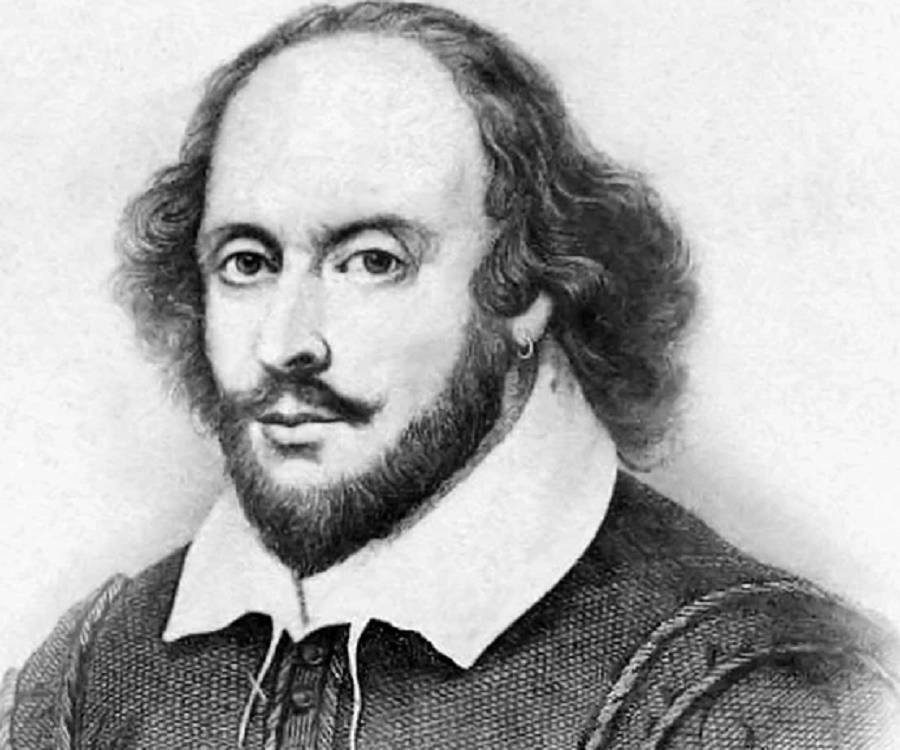
Between 1580 and 1613, William Shakespeare wrote 38 plays and
150 poems, many of which are the best that have ever been written in the
English language.
The plays are broken down into tragedies, comedy,
and history.
If Shakespeare would have written a history of the Catholic
church, it would encompass all three of these categories.
https://reference.yourdictionary.com/books-literature/many-plays-shakespeare-write.html
The tragedy part comes into play when you
consider the order of papal succession.
Since the beginning of the Catholic church, there have been
266 popes, including Pope Francis. Not all of them died a natural death
in office.
Throughout history, there have been a
number of Popes who had very short tenures. In fact, a total of 9 Popes reigned
for less than 30 days, and 2 Popes reigned only for 33 days.
A total of 10 Popes served 20 years or
longer, and the longest serving Pope was Pius IX, who served for more than 31
years.
Pope John VIII was the bishop of Rome and ruler of the Papal
States from 14 December 872 to his death. He is often considered one of the
ablest popes of the 9th century. John devoted much of his papacy attempting to
halt and reverse the Muslim gains in southern Italy and their march northwards.
John
VIII was assassinated in 882 by his own clerics; he was first poisoned, and
then clubbed to death. The motives may have been his exhaustion of
the papal treasury, his lack of support among the Carolingians, his gestures
towards the Byzantines, and his failure to stop the Saracen raids.[15] Without the protection of powerful magnates
or the Carolingian emperor, the papacy after John VIII's reign became
increasingly subject to the machinations and greedy ambition of the rival clans
of the local nobility
https://www.google.com/search?gs_ssp=eJzj4tTP1TcwMqkqKTZg9OIryC9IVcjKz8hTKMvMzAQAcPMIsw&q=pope+john+viii&rlz=1C1GCEA_enUS1017US1017&oq=pope+John+VIII&aqs=chrome.1.69i59j46i20i263i512j0i512l3j0i22i30l2j0i390l3.34658j0j15&sourceid=chrome&ie=UTF-8
Pope Stephen VI was the bishop of Rome and ruler of the Papal
States from 22 May 896 to his death. He is best known for instigating the
Cadaver Synod, which ultimately led to his downfall and death.
The circumstances of his election as pope are unclear, but
he was sponsored by one of the powerful Roman families, the dukes of Spoleto,
that contested the papacy at the time.
Stephen is chiefly remembered in connection with his
conduct towards the remains of Pope Formosus. The rotting corpse of Formosus
was exhumed and put on trial, before an unwilling synod of the Roman clergy, in
the so-called Cadaver Synod in January 897. Pressure
from the Spoleto contingent and Stephen's fury with Formosus probably
precipitated this extraordinary event. With the corpse propped up on a
throne, a deacon was
appointed to answer for the deceased pontiff. During the trial, Formosus's
corpse was condemned for performing the functions of a bishop when he had been
deposed and for receiving the pontificate while he was the bishop of Porto,
among other revived charges that had been levelled against him in the strife
during the pontificate of John VIII.
The corpse was found guilty, stripped of its sacred vestments, deprived of
three fingers of its right hand (the blessing fingers), clad in the garb of a
layman, and quickly buried; it was then re-exhumed and thrown in the Tiber. All ordinations
performed by Formosus were annulled.
The trial excited a tumult. Though the instigators of the
deed may actually have been Formosus' Spoletan enemies, notably Guy IV of
Spoleto, who had recovered their authority in Rome at the beginning
of 897 by renouncing their broader claims in central Italy,
the scandal ended in Stephen's imprisonment and his death by strangling that summer.
https://en.wikipedia.org/wiki/Pope_Stephen_VI
Pope Leo V was the bishop of Rome and nominal ruler of
the Papal States from July 903 to his death in February 904. He was pope
immediately before the period known as the Saeculum obscurum, when popes
wielded little temporal authority. Leo V was born at a place called Priapi,
near Ardea.
During his brief pontificate, Leo granted the canons of Bologna a
special bull (epistola tuitionis) where he exempted
them from the payment of taxes. However, after a reign of a little over two
months, Leo was captured by Christopher, the cardinal-priest of San Lorenzo in Damaso, and thrown into prison.
Christopher then had himself elected pope (903–904). Although now considered
an antipope,
he had until recently been considered a legitimate pope. If Leo never
acquiesced to his deposition, then he can be considered legitimate pope until
his death in 904.
Leo died shortly after being deposed. He was either
murdered on the orders of Christopher, who was in turn executed
by Sergius III (904–911) in 904, or,
possibly, both were ordered to be killed at the beginning of Sergius’
pontificate, either on the orders of Sergius himself, or by the direction of
Sergius' patron, Theophylact I of Tusculum. According
to Horace K. Mann, it is more
likely that Leo died a natural death in prison or in a monastery
https://en.wikipedia.org/wiki/Pope_Leo_V
Pope John X was the bishop of Rome and nominal ruler of
the Papal States from March 914 to his death. A candidate of the counts of
Tusculum, he attempted to unify Italy under the leadership of Berengar of
Friuli, and was instrumental in the defeat of the Saracens at the Battle of
Garigliano.
The
power struggle between John X and Guy of Tuscany and Marozia came to a
conclusion in 928. Guy had secretly collected a body of troops, and with them
made an attack on the Lateran
Palace. Peter was caught off his guard, having only a
few soldiers with him, and was cut to pieces before his brother's eyes. John
was thrown into a dungeon, where he remained until he died. There
are two variant traditions surrounding his death; the first has it that he was smothered
to death in the dungeon within a couple of months of his deposition.
Another has it he died sometime in 929 without violence, but through a
combination of the conditions of his incarceration and depression.
https://en.wikipedia.org/wiki/Pope_John_X
Pope Benedict VI was the bishop of Rome and ruler of the Papal
States from 19 January 973 to his death in 974.
Otto I died soon after Benedict VI's election in 973, and
with the accession of Otto II, troubles with the nobility emerged in Germany. With
the new emperor so distracted, a faction of the Roman nobility opposed to the
interference of the Ottonian emperors in Roman affairs, took advantage of the
opportunity to move against Benedict VI. Led by Crescentius the Elder and
Cardinal-Deacon Franco Ferrucci, who had been the preferred
candidate of the anti-Ottonian faction, Benedict was taken in June 974, and
imprisoned in the Castel Sant'Angelo, at that time a stronghold
of the Crescentii. Ferrucci was then proclaimed as the new pope, taking
the name Boniface VII.
Hearing of the overthrow of Benedict VI, Otto II sent an
imperial representative, Count Sicco, to demand his release. Unwilling to step
down, Boniface ordered a priest named Stephen to murder Benedict whilst he was
in prison, strangling him to death. Boniface
VII is today considered an antipope, with Benedict VII as
the legitimate successor of Benedict VI.
Pope John XIV, born Pietro Canepanova, was the bishop of
Rome and ruler of the Papal States from November 983 until his death
Pope Benedict VII died in 983. Empresses Adelaide and Theophanu,
Otto II's mother and wife respectively, wished to enthrone Majolus of Cluny as
the new pope,
but he refused, and Pietro Canepanova was chosen instead. Canepanova took
the papal name John
XIV to avoid being linked to Saint Peter.
Otto II died shortly after his election, his heir Otto III,
being only 3 years old and unable to protect John's position. Antipope Boniface VII, on the strength of the
popular feeling against the new pope, returned from Constantinople and
placed John XIV in prison in the Castel Sant'Angelo, where he died either
from starvation or poison.
The comedy part of papal succession when
you consider the times when there was more than 1 pope during a given time
period, essentially a religious version of Abbot and Costello’s “who’s on
first?”.
Since Popes generally are older when they are elected, it
is not unusual for a Pope to die in office. As a result, it is common for 2
different people to serve as a pope in a given year. There have also been 12
times when there were THREE different Popes in one year, and there is one year
(1276) when there were FOUR different people to serve as the Pope in a given
year.
https://en.wikipedia.org/wiki/Year_of_three_popes
There was also a period of time (1378 – 1417) when three
popes served AT THE SAME TIME. Pope Clement was the Pope of Avignon (France),
Urban was the Pope of Rome, and Alexander was the Pope of Pisa.
I went to a Catholic grade school and a Catholic high school, but
never learned about any of the scandals that existed with the church over the
years.
You could probably write a book about the Crusades (and people
have). Although many people consider them to be a worth cause, the truth is
that they did a lot of harm, especially if you consider that 7 of the 39
crusades were conducted against fellow Christians.
https://en.wikipedia.org/wiki/Crusades
Steve Berry is one of my favorite novelists.
He has more than 25 million books in print, translated into
over forty languages. With his wife Elizabeth, he operates History Matters, an
organization dedicated to historical preservation. He serves as an emeritus
member of the Smithsonian Libraries Advisory Board and was a founding member of
International Thriller Writers. His lates book, “The Omega Factor” alerted me
to the fact that papal succession can sometimes be a very messy affair.
The Catholic church, of course, has 2000 years of history
(the third type of play written by Shakespeare). I don’t know if I would say
that Steve Berry is a better writer than Shakespeare, but he is definitely a master
at making history come alive,