Monday, January 2, 2023

The Supreme Court


Public confidence in the Supreme Court is now at all time low. Only 25% of the American public has confidence in the court, a sharp decrease from 2021, when 36% of the public had confidence in the court. Confidence in the court peaked at 56% in 1987 and 1988.

The short explanation for the decline is simply that the Supreme Court has gotten too conservative.


Heather Cox Richardson discussed the problem in her newsletter of January 1.

Here’s the key paragraphs:

 Yesterday, Supreme Court Chief Justice John Roberts issued the 2022 Year-End Report on the Federal Judiciary. It’s an interesting document, not just for what it says, but also for what it doesn’t say. The introduction is dominated by a discussion of the 1954 Brown v. Board of Education decision in which the Warren court overturned the 1896 Plessy v. Ferguson decision and required the desegregation of the public schools. It was a moment in which the Supreme Court’s stance overturned a long history of discrimination and appeared heroic.


The unstated comparison is to this summer’s decision of the Roberts court in Dobbs v. Jackson Women’s Health, overturning the 1973 Roe v. Wade decision that recognized a woman’s constitutional right to obtain an abortion. The comparison runs aground on the reality that Brown v. Board expanded equality before the law and Dobbs v. Jackson Women’s Health contracts it, but it is interesting that Roberts feels obliged to use the court’s annual report to defend the court’s actions.

The report makes no mention of the leak of the Dobbs decision, a leak that the right wing met with fury but that has come to appear to be associated with right-wing Justice Samuel Alito and thus seems to have fallen off their radar screen. The report does not mention popular demands for justices to have a code of ethics—demands heightened by news that Justice Clarence Thomas’s wife Ginni participated in attempts to overturn the 2020 presidential election but he did not recuse himself from making decisions about that attempt—but it does demand protection for judges for their safety, despite the court’s recent expansion of gun rights. “A judicial system cannot and should not live in fear,” Roberts wrote.

 https://heathercoxrichardson.substack.com/p/january-1-2023

Many of the justices on the court are Catholics, but even the National Catholic Reporter sees a problem with that. Although the publication just named Samuel Alito as the Newsmaker of the Year, it was not a vote of confidence. The closing paragraphs explain their position:

 Alito has said publicly that he recognizes that his judicial decisions affect people. "It's important to keep in mind that these decisions are not abstract discussions — they have real impact on the world," he said at a September inaugural lecture for the Project on Constitutional Originalism and the Catholic Intellectual Tradition at the Catholic University of America's law school.

That is true and it is newsworthy, though — as we have seen in the decisions about gun rights, labor unions, the death penalty, abortion and the coopting of our democratic process for one aim — Alito's impact is certainly not worth cheering.

The article below goes into more detail on his decisions regarding abortion,   sex discrimination, environmentalism, labor unions, voting rights, gun ownership, the death penalty, and same sex marriage – all of which are contrary to public opinion.

 https://www.ncronline.org/opinion/editorial/editorial-justice-samuel-alito-ncrs-2022-newsmaker-year

The first judiciary act was passed in 1789, and it has been modified 7 times since then. In 2021, Senate Bill 1141 was passed, in an attempt to increase the number of justices on the Supreme Court from 9 to 13. However, it did not pass.     

 https://en.wikipedia.org/wiki/Judiciary_Act_of_1789

Just as FDR’s plan to “stack the court” in 1937 was not successful, the latest version will not succeed either. For now, the solution is more long term. The fact that the Democrats still control the senate means that they will have an opportunity to appoint more moderate justices to the lower courts.

Over the course of Donald Trump's presidential term, he nominated 234 lawyers, judges, and politicians for federal judgeships.

Out of the 234 judges appointed, three of the public servants made it to The Supreme Court.

Meanwhile, 174 judges were confirmed for the US Court of Appeals and 54 judges assumed positions with the US District Courts.

To round out the exact aforementioned number, three more officials were confirmed for the US Court of International Trade.

The very last judge nominated by Trump was Aileen Cannon, who took office after Trump was defeated in 2020. Her meddling in the Mar-A-Lago document case was roundly criticized by legal experts.

https://www.thesun.co.uk/news/18997649/donald-trump-supreme-court-justice-appointees/

As of January 1, 2023, the United States Senate has confirmed 97 Article III judges nominated by Biden: one Associate Justice to the Supreme Court, 28 judges for the United States courts of appeals and 68 judges for the United States district courts. There are 45 nominations awaiting Senate action: Nine for the courts of appeals, and 36 for the district courts. There are nine vacancies on the U.S. courts of appeals, 70 vacancies on the U.S. district courts, two vacancies on the United States Court of International Trade, as well as 28 announced federal judicial vacancies that will occur before the end of Biden's term (4 for the courts of appeals and 24 for district courts). Biden has not made any recess appointments to the federal courts. Biden had the largest number of Article III judicial nominees confirmed during a president's first year in office since Ronald Reagan in 1981.

Regarding the Article I courts, as of December 15, 2022, the Senate has confirmed three judges nominated by Biden, two to the United States Court of Federal Claims and one to the United States Court of Appeals for the Armed Forces. There are no nominations to the Article I courts awaiting Senate action. There are two vacancies on the United States Court of Federal Claims and two on the United States Tax Court. On March 2, 2021, Biden designated Elaine D. Kaplan as Chief Judge of the Court of Federal Claims Biden has not elevated any judges to the position of Chief Judge.

 https://en.wikipedia.org/wiki/List_of_federal_judges_appointed_by_Joe_Biden

Although we all may disagree with Samuel Alito’s decisions, he DID recognize that that they DO have consequences – which is precisely why the 2022 midterms were such a disaster for the Republican Party. Oddly enough, that may be the reason that we should be thankful for Samuel Alito.


Friday, December 23, 2022

pay phones


Do you remember the days when you could go into a phone booth, drop in a dime, and make a call? Believe it or not, phone booths still exist, although the day of the 10-cent phone call has now faded into history. Today, there are still 100,000 phone booths that are in operation in America – and they are still a profitable business. Pay phone providers reported $286 million in revenue in 2015 (the last year available), according to the most recent FCC report. They can still be profitable, particularly in places where there isn't cell phone or landline coverage, said Tom Keane, president of Pacific Tele management Services. Keane's company operates 20,000 pay phones around the country.


https://money.cnn.com/2018/03/19/news/companies/pay-phones/index.html


7 years later, there still ARE payphones that are in use, and they can be found at the link posted below.

https://www.google.com/maps/d/viewer?mid=1_YIGV2qY1JFH-Ve27LNMOzxfvn-kNnOe&ll=36.515818249459095%2C-98.10712209999994&z=5

Lately, there have been some variations on payphones that will surprise you.

First, in June of this year, a man named Mike Dank, and his partner Naveen Albert,  formed a company called PhilTel, - a phone collective that would convert old donated pay phones into free working phones using coinless circuit boards rewired to connect through the internet.

Some people are surprised he wants to bring back the retro phones, but Dank said he’s not alone in his enthusiasm. He points to a Google map site that tracks pay phones that have been reported to still be operating in the United States, and one that is devoted exclusively to the Philadelphia area.


https://www.washingtonpost.com/lifestyle/2022/12/16/philadelphia-free-pay-phones-dank/

It was 1995 — four years after Dank was born — when the number of pay phones in the United States peaked at 2.6 million.

 By the end of 2016, there were less than 100,000 still in service, according to the Federal Communications Commission. New York City bid farewell to what some called the city’s last pay phone this past May, and there were only six pay phones said to be working in D.C. in 2021.

 Another variation on the traditional phone booth is one that is designed to be installed INSIDE offices. Many office environments have an open seating concept, which makes private conversations virtually impossible. The solution is Zenbooth.


The office telephone booth is an innovative concept developed by the company’s architectural designers seeking to solve the open-office, high-stress, low-productivity dilemma. Since its development, their revolutionary idea has provided quiet workspaces for countless employees in companies, large and small, better enabling them to more effectively achieve their companies’ goals. The self-contained units, ranging from one- to two-person phone booths, offer a less-expensive solution than hiring a contractor to renovate the office.


The units, which are crafted from high-quality materials, are quick to assemble, easy to move around the office and even easier to break down and transport during an office relocation. In short, the booths are a highly practical way to provide your employees with a fully-equipped workspace where they can close the door on workplace commotion and concentrate on getting things done.


https://zenbooth.net/blogs/zenbooth-blog/office-phone-booths-increasing-productivity-and-revenue


Although there are now more cell phones in this country that there are people, their convenience comes at a price, because you can now be tracked wherever you go, an fact that caused some serious legal issues for the people who were at the Capitol on January 6, since over 900 people have now been charged.


https://tohell-andback.blogspot.com/2019/12/hold-phone.html

 Although it seems as though every kid in school today has their own phone, it's also true that a large number of them would not know how to use a "traditional" telephone:

https://www.youtube.com/watch?v=oHNEzndgiFI

Although I have absolutely no need for a pay phone, there actually is ONE in Arizona, but I would have to drive to Phoenix to use it.

 If you’re interested, I HAVE published some articles about the Christmas season, but since we will soon be RINGING in a New Year, I thought that you might like a story about phones. 


Sunday, December 11, 2022

God bless the Irish


One of the current best sellers of the hard cover non-fiction books being sold now is “Surrender”, by Bono – which I recently picked up at the library. It’s over 500 pages long, but it’s worth reading.

Bono was still in his teens when U2 was formed. Like many young bands, they had their struggles, compounded by the fact that Bono lost his mother when he was only 14. The band persisted, and today Bono’s net worth is $700 million, and he has “rubbed shoulders” with many of the most prominent people on the planet, in part because of his dedication to humanitarian clauses.

Born and raised in Dublin, he attended Mount Temple Comprehensive School where in 1976 he began dating his future wife, Alison Stewart, as well as forming, with schoolmates, the band that became U2. Bono soon established himself as a passionate front man for the band through his expressive vocal style and grandiose gestures and songwriting. His lyrics frequently include social and political themes, and religious imagery inspired by his Christian beliefs.

https://en.wikipedia.org/wiki/Bono

During U2's early years, Bono's lyrics contributed to the group's rebellious and spiritual tone. As the band matured, his lyrics became inspired more by personal experiences shared with the other members. As a member of U2, Bono has received 22 Grammy Awards and has been inducted into the Rock and Roll Hall of Fame.

Aside from his music, Bono is an activist for social justice causes, both through U2 and as an individual. He is particularly active in campaigning for Africa, for which he co-founded DATA, EDUN, the ONE Campaign, and Product Red. In pursuit of these causes, he has participated in benefit concerts and lobbied politicians and heads of state for relief Bono has been honored for his philanthropic efforts.

 In 2005, Bono was named one of the Time Persons of the Year.

He was granted an honorary knighthood by Elizabeth II of the United Kingdom in 2007 for "his services to the music industry and for his humanitarian work", and was made a Commandeur of the French Ordre des Arts et des Lettres (Order of Arts and Letters) in 2013. Bono has also attracted criticism for bypassing African businesses in his activist efforts and for tax avoidance in his personal finances.

The book expands on the origin of 40 songs, and how they came to be. What I found most interesting to far is the chapter about “the troubles”, which is titled “Sunday, bloody Sunday”. The event was the killing of 26 peaceful Irish demonstrators by British forces on January 30, 1972. With help from president Bill Clinton, a peace agreement was finally signed in May of 1998. John Hume and David Trimble (leaders of the Ulster Unionist Party and the Social Democratic Labour Party, respectively) won the Nobel Peace Prize.

 Long before St. Patrick drove the snakes out of Ireland in he 5th century, Ireland has been inhabited by humans, most prominently the Druids. Nearly 1000 years before Stonehenge was built in southern England, the druids built a burial site in Northern Ireland called New Grange. You can see a picture of it in the link below:

https://tohell-andback.blogspot.com/2020/06/summer-solstice.html

 For many years, the Irish people struggled under British rule.

The Irish Potato Famine, also known as the Great Hunger, began in 1845 when a mold known as Phytophthora infestans (or P. infestans) caused a destructive plant disease that spread rapidly throughout Ireland. The infestation ruined up to one-half of the potato crop that year, and about three-quarters of the crop over the next seven years. Because the tenant farmers of Ireland—then ruled as a colony of Great Britain—relied heavily on the potato as a source of food, the infestation had a catastrophic impact on Ireland and its population. Before it ended in 1852, the Potato Famine resulted in the death of roughly one million Irish from starvation and related causes, with at least another million forced to leave their homeland as refugees.

With the ratification of the Act for the Union of Great Britain and Ireland in 1801, Ireland was effectively governed as a colony of Great Britain (until the Irish War of Independence ended in 1921). Together, the combined nations were known as the United Kingdom of Great Britain and Ireland.

Roughly 30 years after the potato famine ended, Ireland was stuck again by a deadly plague, which led to the deaths of most of the siblings of my maternal grandfather Martin Stenson, who was born in 1882.

Eventually, the Irish people revolted against British rule,

On Easter Sunday of 1916, Irish loyalists staged an armed insurrection. Ultimately, the British Army put down the rebellion, which cost 485 lives. Although unsuccessful, the rebels persisted, and the Irish Free State finally came into being in December of 1922, 4 months after the death of Michael Collins, who was a prominent figure in the opposition forces.

https://en.wikipedia.org/wiki/Easter_Rising

The potato famine forced thousands of Irish people to leave their homeland. The very first person to go through Ellis Island was a 17-year-old Irish girl named Anne Moore, who had sailed from Southern Ireland with her two younger brothers.

From its opening in 1892 until its closure in 1954, 12 million people passed through Ellis Island. According to History, immigrants arriving in the northeastern U.S. grew to include Italians and Jews. The driving forces of this new wave of immigration were poverty in Italy and oppressions of Jews throughout eastern Europe and Russia. Other migrants were Slavs from present-day Hungary, Czech Republic, Slovakia, and Poland. Even Turkish and Syrian migrants were heading west.

https://www.msn.com/en-us/news/us/who-was-the-first-person-to-immigrate-through-ellis-island/ar-AAVPNAq

Although many of the people of Irish descent now live in the majority of the states of the United States, most are on the East Coast. Although most people would assume that Boston is the most popular place for folks of Irish descent, the “most Irish city” is Ocean City, New Jersey. The state that has the highest percentage of Irish descendants is New Hampshire, not Massachusetts, but  Massachusetts IS  a close second, with 20% of the population being of Irish descent.

https://www.zippia.com/advice/most-irish-states-cities/

In 1971, my parents celebrated their 25th wedding anniversary by traveling to County Sligo, the birthplace of Martin Stenson. Although Sharon and I did not make if to Ireland in 1997, the year of our 25th anniversary, my sister and I and our kids made it there in 1999 after we inherited some money from my mother’s estate.

We stayed in a variety of bad and breakfast homes, and even managed to spend one amazing night in an Irish castle. We all had pints at the Guinness brewery, and we all kissed the Blarney stone. The girls all had a chance to ride some Irish horses, which was likely their favorite part of the trip.


Having spent a year in China, and living with a population in Tucson that is largely Hispanic, I’ve grown to truly appreciate people of different backgrounds, but my favorite ethnic group is the one where I have the strongest roots.

God bless the Irish.


Saturday, December 3, 2022

the inmates are taking over the asylum


Thomas Jefferson once said, “an educated citizenry is a vital requisite for our survival as a free people”.

There is unanimity among multiple studies attesting to an epidemic of ignorance among American citizens.  The Woodrow Wilson National Fellowship Foundation found that 60% pf respondents did not know whom the United States fought in World War II, and only 24% knew why the colonists fought the British. A Xavier University study found that 85% of Americans did not know the meaning of the “rule of law” and 68% did not know how many justices sit on the Supreme Court.  The Annenberg Public Policy Center at the University of Pennsylvania found that only 26% of respondents could name the three branches of government, 37% could not name the rights guaranteed by the first amendment, and 53% thought illegal immigrants had no rights under the U.S. Constitution.

Thursday, December 1, 2022

Indian boarding schools


If you are familiar with the Longmire Netflix series titled “Longmire”, you may also be aware that the series is based on 17 novels that author Craig Johnson has released based on the adventures of sheriff Langmire.


I picked up his more recent book (“Hell and Back”) at the library recently. The tale is set in the town of Fort Pratt, Montana, which was the site of an Indian boarding school fire in 1896.

If you Google the town name, you’ll also pull up an article about the history of Indian boarding schools in America. Although you can read the entire July 2021 article in the link below, here’s a summary of a few key points:


******************************************************

The Native American children travelled on trains, thousands of miles from their homes, to Pennsylvania’s Carlisle Indian Industrial School in the late 1800s and early 1900s. Many had been forcibly taken from their parents and communities.

Once there, they had to hand over their belongings, put on uniforms, cut off their braids, adopt new names and abandon their languages and cultural practices.

Under teachers in charge of assimilation, the children studied English and memorized the U.S. presidents, reports the Daily Montanan. The rest of the time, they worked on the school grounds or on assignments in neighboring towns.

Some tried to run away. Some married. A few, like Olympic gold medalist Jim Thorpe, had renowned sports careers.

And some never came home, the victims of disease and poor health care, lost to their families. Last month, the Army began disinterring from a military cemetery the remains of 10 children who died between 1880 and 1910 while attending the Pennsylvania school, returning them to their relatives for burial.

The federal government conducted a large-scale drive during nearly a century to assimilate hundreds of thousands of Native American children by removing them from their families and sending them to faraway boarding schools—a painful chapter of U.S. history that Interior Secretary Deb Haaland has directed her agency to investigate.

Haaland, a former member of Congress from New Mexico, is the nation’s first Native American Cabinet secretary and an enrolled member of the Pueblo of Laguna.

Last month, Haaland ordered a federal Indian Boarding School Initiative to recover the histories of the institutions, where she says children endured routine injury and abuse. Native American leaders say the investigation represents a huge step toward acknowledging a devastating loss that has been overlooked by those outside their communities.

In her memo, Haaland said she wants the U.S. investigation to identify the children who attended and their tribal affiliations, along with a particular emphasis on finding records of cemeteries or burial sites connected with the schools that may contain unidentified human remains. Federally run off-reservation schools dotted the West and Midwest, from Arizona to Montana to Michigan to Wisconsin, according to a map created by Dickinson University for a digital resource center for the Carlisle school.

‘Kill the Indian, save the man’

Thousands of students from more than 140 Native American tribes attended the Carlisle Indian Industrial School in its 39 years in operation in southern Pennsylvania. Opened in 1879, it was the first government-run, off-reservation boarding school for Native Americans.

Its founder, Civil War veteran Lt. Col. Richard Henry Pratt, brought a militaristic approach to assimilating Native American children. Pratt said in a speech in 1892: “Kill the Indian in him, and save the man.” His model was to take children at a young age, far from their family, and eradicate their culture.

“One of the main goals was to disrupt the family bonds, the cultural bonds, the language bonds, that’s why you have so many of these schools in so many different places,” said Katrina Phillips, an assistant professor of American and Native American history at Macalester College and a member of the Red Cliff Band of Lake Superior Ojibwe.


Pratt also saw the schools as a way to assert control over adults in tribes. In a letter he wrote in 1879 to the Commissioner of Indian Affairs, Pratt said he took the children of tribal leaders to the school because their parents “will be restrained by that fact and invited to seek for themselves a better state of civilization.”

Many more schools would follow the Carlisle model.

The federal government opened 25 federal off-reservation boarding schools. There were more than 300 other schools run by religious groups with support from the government. The schools operated from the late 1800s to the 1960s. The federal government still oversees four off-reservation boarding schools, but families now send their children by choice. The current schools include Native American language and cultural education.

By 1926, nearly 83 percent of Native American school-age children were in the system, according to the National Native American Boarding School Healing Coalition.

Mass graves in Canada

Halaand’s announcement came amidst two discoveries of mass graves near defunct boarding schools in Canada. She said she was “sick to my stomach” reading news reports about the newly found graves.

The Canadian schools were modeled on those in the United States, but the U.S. government is trailing behind Canada in its investigation. The Canadian government started a truth and reconciliation commission in 2008 to address the legacy of the boarding schools.

Haaland’s memorandum directs the Interior Department to collect historical records, consult with tribes, and deliver a report by next spring.

“Survivors of the traumas of boarding school policies carried their memories into adulthood as they became the aunts and uncles, parents, and grandparents to subsequent generations,” Haaland wrote in her memo. “The loss of those who did not return left an enduring need in their families for answers that, in many cases, were never provided.”

 https://www.ktvq.com/news/national-news/federal-investigation-seeks-to-uncover-painful-history-of-native-american-boarding-schools

Arizona had 47 Indian boarding schools, more than any other state. One of them was less than a mile from what is now Pueblo High school in Tucson, and it was torn down in the early 1960’s to re-emerge as a small shopping center.

 America has a long history of not being kind to the people who were the first inhabitants of the land now know as the United States.

 From 1776 until 1871, the United States signed nearly 400 treaties with Native American tribes, but many of them were violated. The most famous example is the treaty that protected the area surrounding Six Grandfathers Mountain in South Dakota. When gold was discovered in the Black Hills, the treaty was forgotten, and Six Grandfathers Mountain turned into Mount Rushmore.

https://www.acf.hhs.gov/ana/fact-sheet/american-indians-and-alaska-natives-treaties#:~:text=Nearly%20four%20hundred%20treaties%20were,treaties%20with%20the%20Indian%20tribes.

During the 1950’s, the most popular shows on television were westerns, and many of them were fights between cowboys and Indians.

During the 1973 Academy Awards Sacheen Littlefeather (who died earlier this year) represented Marlon Brando, who was declining the award to protest the depiction of Native Americans on television and in movies.

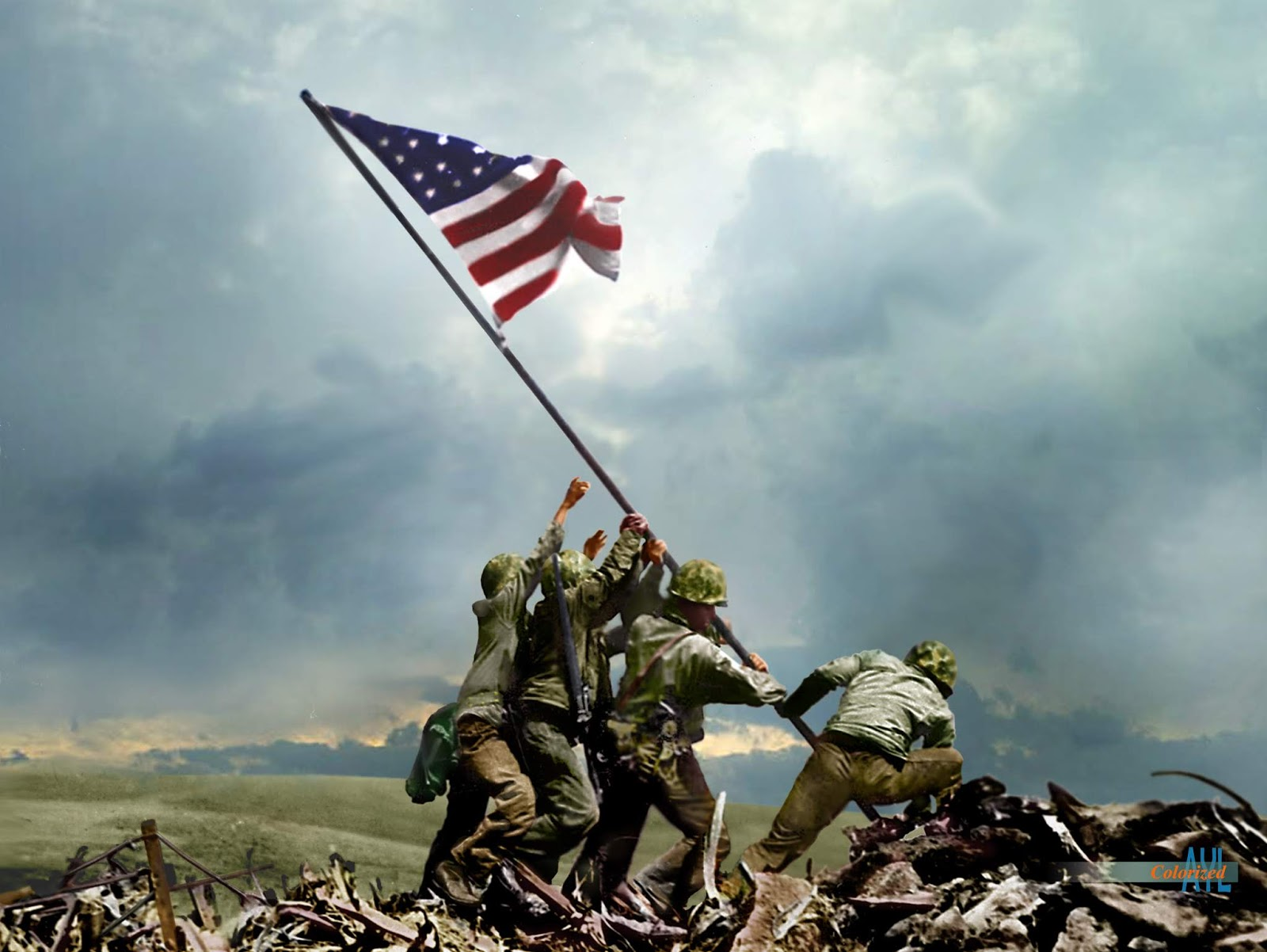
Native Americans did not get the right to vote in federal elections until 1924, but the right was not allowed in a handful states. In Arizona, that year was 1948, which means that when Ira Hayes climbed Mount Suribachi in 1945 with his fellow Marines, he was not allowed to vote in his home state of Arizona. Natives in New Mexico got the right to vote in the same year.


https://www.azcentral.com/story/news/politics/elections/2022/11/04/how-native-people-fought-right-vote-arizona-elections/10652710002/


Now that a Native American is head of the Interior Department, it’s likely that some progress will be made to correct the sins of the past, and “Kemosabe” will take on a new meaning.


https://owd.tcnj.edu/~hofmann/kemosabe.htm