Thursday, May 10, 2018

I’ve been working on the railroad


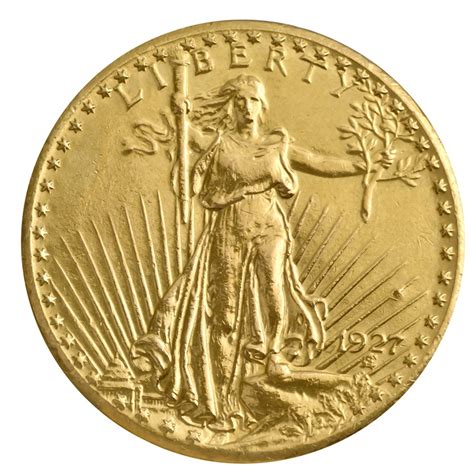
Long before the Sandhills Sixteen released the first version of the song shown about in 1927, a railroad-connected event occurred on this day in 1869.


Since at least 1832, statesmen on both the East coast and the West coast had realized a need to connect both coasts. The California gold rush of 1849 further emphasized the need, and Congress finally authorized funds 4 ears later to survey several routes for a transcontinental railroad. Increasing tensions between the North and South delayed the start of the railroad for a few more years, but Congress still managed to pass the Pacific Railroad Act only a year into the Civil War.

Congress chose two railroads, the Union Pacific and the Central Pacific, to build the railroad, and construction was finally started a year after the Civil War ended. The Union Pacific line started building west from Omaha, and the Central Pacific  line started building east from Sacramento. Despite extremely difficult working condition, the project was completed ahead of schedule and under budget. The two lines finally met in Promontory, Utah, and a gold spike was pounded into the ground to connect the two ends.

Despite the technical success of the railroad, it started to make apparent our country’s tortured relationship with immigrants. The workforce of the Central Pacific line consisted almost entirely of Chinese immigrant, and the Union Pacific line was largely Civil War veterans of Irish descent.

One of the reasons that Chinese laborers were used on the railroad is that the United States and China signed the Burlingame Treaty in 1868, which established formal friendly relations between the two countries. Not long after the treaty was signed, resentment of Chinese immigrants started to build. The Page Act was passed in 1875, and was followed by the Fifteen Passenger Bill in 1879. The Angell Treaty of 1880 temporarily suspended immigration of skilled and unskilled laborers, but still allowed white collar professionals.

And then it got worse.

On May 6, 1882, President Chester A. Arthur signed the Chinese Exclusion Act, which prohibited ALL immigration of Chinese laborers. Although it was only supposed to be effective for 10 years, it was not repealed until December 17, 1943, when the Magnuson Act was passed. The Chinese Exclusion Act was the first (but not the last) law implemented to prohibit a specific ethnic group from immigrating into the Untied States. One of the most infamous laws was Operation Wetback (signed in 1954), which targeted Mexicans, but the current administration has tried to slam the door on a group that Trump calls “mooselums”.


Although the Irish potato famine vastly increased the number of Irish people immigrating to America between 1845 and 1849, Irish immigrants before that time period also experienced discrimination.


Starting in the 1840’s, it became more difficult for Irish people to find jobs in America, and “no Irish need apply” signs started to appear not long after. The last such sign did not disappear until 1909. As a result, many Irish found the prospect of military service during the Civil War more attractive than not working at all.


On June 17, 1885, the French steamer Isere arrived in New York harbor. In its hold were crates holding the disassembled Statue of Liberty, a gift from France to the United States. Although the arrival of the statue was greeted with enthusiasm by the American people, it took until April of 1886 to raise enough money for the pedestal, and the completed statue was dedicated six months later, on October 28, 1886. In 1903, a bronze tablet containing the words to Emma Lazarus’s sonnet “The New Collosus” (which was used to raise money for the pedestal) was mounted inside the pedestal. During the 1986 renovation, it was moved to the Statue of Liberty museum in the base of the statute.

The complete poem is listed below, but most of us are only familiar with the closing lines, which have been highlighted for emphasis.

Not like the brazen giant of Greek fame,
With conquering limbs astride from land to land;
Here at our sea-washed, sunset gates shall stand
A mighty woman with a torch, whose flame
Is the imprisoned lightning, and her name
M
OTHER OF EXILES. From her beacon-hand
Glows world-wide welcome; her mild eyes command
The air-bridged harbor that twin cities frame.

"Keep, ancient lands, your storied pomp!" cries she
With silent lips. "Give me your tired, your poor,
Your huddled masses yearning to breathe free,
The wretched refuse of your teeming shore.
Send these, the homeless, tempest-tost to me,
I lift my lamp beside the golden door!"

Despite those encouraging words, immigrants have come under attack at various times in our country’s issue.
Ellis Island was opened to receive immigrants on January 1, 1892 (the first person to arrive was a 15 year old Irish girl named Annie Moore), but it didn’t take long before restrictions started to be put in place. Concern over security during WWI prompted Congress to pass literacy test requirements in 1917, but Congress felt a need to further restrict immigrating by the imposition of quotas, which were codified in the Johnson-Reed Act, which is better known as the Immigration Act of 1924.


Restrictions loosened after WWII, when the United States admitted displaced persons from Europe in 1948 and 1950, but we’ve become a lot less friendly since the election of November 2016.


We are a land of immigrants, and our strength comes from our diversity. To the chagrin of old white Americans, though, it won’t be long before Caucasians are a minority. It may not happened in my lifetime, but it already HAS happened in our schools. As of 2016, babies of color outnumber white babies, and minority children will be the majority by 2020.


The long standing prejudice again those early Irish and Chinese workers has long since faded away. Irish politicians have done well over the years, and the Chinese, especially in recent years, have become a financial powerhouse in our country.

On November 7, 2016, debt held by the public was $14.3 trillion or about 76% of the previous 12 months of GDP. Intragovernmental holdings stood at $5.4 trillion, giving a combined total gross national debt of $19.8 trillion or about 106% of the previous 12 months of GDP. As of December 2017, $6.3 trillion or approximately 45% of the debt held by the public was owned by foreign investors, the largest being China (about $1.18 trillion) then Japan (about $1.06 trillion).

Think about that for a minute.

Communist China how holds over $1 trillion dollars of our national debt. As of April of 2018, the United States is still the world’s largest economy, but the Chinese are gaining fast. According to Fortune magazine, China will be the THE world’s largest economy before 2030. Japan is still a distant third, as it was in 1990, but China was a lot smaller in the year that the Soviet Union was the 2nd largest economy.


In October of 2014, the iconic Waldorf Astoria was purchased by a Chinese holding company called Anbang Insurance (one of the world’s wealthiest companies) for $1.95 billion. At the time of its purchase, it was the most expensive hotel ever sold.  In February, Chinese authorities took control of the private held company due to the fact that its chairman had been accused of financial crime. A few days ago, chairman Wu Xiaohui, was sentenced to 18 years in prison after being convicted of fraud and embezzlement.

The Chinese STILL have a connection to our railroads, but it is a lot different than it used to be.

In the fall of 2015, a consortium of Chinese rail companies teamed up with Las Vega based XpressWest to build a 370 kilometer high speed rail line in California. When completed, the project will have consumed $5 billion of capital.


I wouldn’t lose a lot of sleep over China’s growing financial impact on our economy, since there really isn’t much we can do to stop it. For now,  just relax by listening to an old railroad song:


Monday, May 7, 2018

the value of being poor


This morning’s edition of the New York Times had an inspiring story about a woman named Sylvia Bloom, a Brooklyn native who died in 2016, not long after retiring from her job as a legal secretary at the age of 96. She had worked there for 67 years.


Born in 1903 to eastern European immigrants, she attended public schools in Brooklyn, and later completed a degree at Hunter College at night, while working full time during the day.

In 1947, she joined a newly formed law firm named Cleay, Gottlieb, Steen and Hamilton. At the time of her death, the firm had more than 1200 lawyers, and hundreds of staff members.

Although her salary as a legal secretary was “adequate” it was not sufficient to support a lavish life style. When she started with the firm, it was common for legal secretaries to get involved in the personal finances of her bosses. Whenever her bosses made investments, she often bought the same stocks, but in smaller amounts.

Although married, she and her husband never had children of their own, and they always lived a modest lifestyle, living in a rent controlled apartment. They almost always took public transportation.

Her soft spot was the Henry Street Settlement on the Lower East Side, a school for disadvantaged student, which recently became a HUGE beneficiary of her thrift and financial acumen.

Over the course of the career with the law firm, Ms. Bloom’s investments did well. She spread the investments to three brokerage firms and 11 banks. At the time of her death, she had accrued a fortune of more than $9 million.

Last week, the terms of her will were made public, and the Henry Street Settlement learned that she had endowed them with $6.2 million towards their scholarship fund.

If you have read “The Millionaire Next Door”, you know that there are a LOT of wealthy people living in our midst, but you would never known that by their lifestyles. The Times article also mentions Leonard Gigowski, Grace Groner (who I have written about before) and Donald and Mildred Othmer, all of whom lived modestly , but managed to amass large fortunes.ttp:


One thing that all of these people had in common is that they grew up during the Great Depression, and I have actually benefited personally from people that are similar to them.

My dad was born in 1909 (the golden age of farming) and my mother was born in 1913. Dad’s mother died when he was 11, leaving his dad alone to raise 7 children. In the summer of 1929, 56 year old Mark Brennan died of a heart attack, so my 20 year old dad and his 18 year old brother became heads of the household. Meanwhile, my mother’s parent’s saved up a modest down payment that allowed them to purchase a house in Hastings, Minnesota in the fall of 1929, roughly a month before the market crashed. Money was right, but they managed to hold on to the farm, which is still owned by the family today. One of mom’s siblings (one of the 2 who lived to be 95 years old) wound up living in the house for a total of roughly 80 years. Two of my dad’s sisters never married. One of them worked at a small bank (Midway National) in St. Paul, and retired to a comfortable, but modest, lifestyle.

His other unmarried sister, terrified of running out of money, worked at Smead Manufacturing in Hastings until she was in her 80’s. Having witnessed the failure of banks in the 1930’s, as well as the stock market crash, she developed a strong preference for GUARANTEES, and kept virtually all her money in passbook savings accounts, due to the fact that the FDIC guaranteed up to $100,000. When she passed,  she had over $500,000 in six local banks, and almost all of that money was distributed to her many nieces and nephews.

It’’s not uncommon to read stories about lottery winners who eventually wind up bankrupt, but THE most popular image of the value of poverty is a picture that was taken by Dorothea Lange in 1936. Her picture, titled “migrant mother” (see below) shocked the nation, and led to immediate government assistance to people much like her. Her identity was not revealed until nearly 40 years later, when the world learned that her name was Florence Owens Thompson, a Native American women who was born in Indian Territory the same year that Sylvia Bloom was born in Brooklyn. In the year that the picture was taken, she was on her second marriage, and had given birth to 7 children. By the time of her death, she had married once again, and had given birth to 3 more children. She was 32 years old when the picture was taken, but looked roughly 20 years older than that.


Later in life, her 10 children bought her a small home in Modesto, California, but she found that she preferred living in a mobile home, and moved back into one. In a 2008 interview, one of her daughters (Katherine McIntosh), described her mother as a “very strong lady” and “the backbone of of our family”. She said, “we never had a lot, but she always made sure we had something. She didn’t eat sometimes, but she always made sure we had something.” 

Like Sylvia Bloom’s story, Florence Thompson’s story also continues a very interesting twist.

In 1998, the United States Postal Service issued a stamp with the image of “the migrant mother” on its face, one of the few times that the Post Office had issued a stamp honoring someone who had been dead less than 10 years.  In the same year that the stamp was issued, Dorothea Lange’s handwritten notes and signature were sold by Sotheby’s of New York for $244,500. Four years later, Lange’s personal print of “the migrant mother” was sold by Christie’s New York for $141. 500. In October of 2005, an anonymous buyer paid $296,000 for 32 rediscovered Lange photos, which was far more that the pre-auction price estimate.


In 1998, the late Robert Schuller published a book titled “Tough Times Never Last, but Tough People Do”. That title describes not only Sylvia Bloom and Florence Thompson, but also millions of other people who struggle with adversity, but still manage to survive all the setbacks that the world can throw at them.
  
Keep that in mind the next time you’re feeling sorry for yourself.


Friday, May 4, 2018

Who killed Martin Luther King Jr. ?


There is no shortage of conspiracy theories in America, and the link below will provide a list of most of them. Some of them almost seem plausible (like the ones penned by former governor Jesse Ventura), and some are just plain ruts (like the ones created by Alex Jones).


The most prominent conspiracy theories are the ones connected to the assassination of JFK. To date, close to 1000 books have been written about the event, and most of them support the theory that there WAS a conspiracy to kill Kennedy. The litany of guilty parties include the CIA, the Mafia, LBJ, Fidel Castro, the KGB, or some combination of some of them

Martin Luther King was assassinated almost exactly 50 years ago. His death also has triggered a number of conspiracy theories, which blame a random African-American man who happened to be outside the Lorraine Hotel the night of shooting, the mysterious Raoul, a white lieutenant with the Memphis police department, Loyd Jowers, the Federal government, the Army, the Mafia, and Henry Clay Wilson. The conspiracy theories have flourished due to the fact that the King family eventually came to doubt the guilt of James Earl Ray, and filed a suit in 1999 for a new trial for Ray. Ultimately, the jury found that Loyd Jowers, and other unnamed parties, were guilty of King’s assassination, and the jury assessed a penalty of $100 against him.


Here is an intriguing thought, though. What if King himself orchestrated his own assassination in order to preserve his legacy? Sounds a bit far fetched, doesn’t it? Believe it or not, though, it actually IS a possibility.

One of my favorite authors is a man named Steve Berry. Like John Grisham, he decided that writing novels was more profitable than being an attorney and legislator, and he released his first novel in 2003, 14 years after Grisham released his first novel. For those of you who think that making a living as a writer is easy, consider that fact that Berry first started writing in 1990, but it took him 12 years and 85 rejections before he was successful in getting his novel published.  Berry credits the nuns who taught him in Catholic schools with instilling the discipline needed to both craft a novel and to find a publisher.


To date, Berry has written 23 novels – and I have read most of them. In all,  he has more than 22 million books in print, which have been translated into 40 languages and sold in 51 countries.

Although John Grisham’s net worth has been estimated to be around $300 million, Steve Berry has kept his financial information a bit closer. However, it IS possible to tour his dream house in St. Augustine, which hosts a number of references to his novels, six of which have been on the New York Times best seller list


Berry’s latest book, which I finished reading this morning, is “The Bishop’s Pawn”, and it’s about the assassination of MLK. The rare coin pictured below  plays a prominent part in the novel


Like most people, I read both fiction and non-fiction. As is the case with a lot of people, the majority of the books I read tend to fall into the fiction category. My favorite fiction writers are the folks who blend historical facts with a tightly woven adventure story, and people like Steve Berry, Clive Cussler, Dan Brown, and John Grisham are masters at their craft. It’s best to keep your phone handy when reading one of their novels, since you will find yourself looking up things as you work your way through the book.

Although the possibility of orchestrating his own death may still seem far-fetched, if you read his “mountain top” speech, which was given without notes the night before he was killed, it’s clear that he knew that his days were numbered. Here are the closing comments:

"Like anybody, I would like to live a long life. Longevity has its place. But I'm not concerned about that now. I just want to do God's will. And He's allowed me to go up to the mountain. And I've looked over. And I've seen the Promised Land. I may not get there with you. But I want you to know tonight, that we, as a people, will get to the promised land!"
  
When you get a chance, get your hands on a copy of The Bishop’s Pawn”, and get “the rest of the story. You won't be disappointed.


Thursday, May 3, 2018

why I don't watch television, part 3


When I was a kid, life was pretty simple when it came to watching television. There were only 3 channels to choose from, our black and white television had to be turned on manually, and we had rabbit ears attached to the back of the set for better reception.

Naturally, life has gotten a lot more complicated than that, and I have published a couple of articles in the past that discuss that journey into a land that would absolutely befuddle our parents.


When we lived in Flagstaff, our television came courtesy of DIRECTTV, which came bundled with our CenturyLink internet service. When we moved to Tucson, the shows that Sharon liked to watch were not available in the Tucson area on DIRECTTV, so we switched to Comcast.

That changed last weekend.

When was on the phone with CenturyLink about a week ago with a question about our bill, the rep that I was talking to mentioned that specials that they were running on DIRECTTV. After consultation with the TV expert in our household, we made the switch, and the rep came to our house last Saturday to complete the installation.

If you went to the DIRECTTV website, you’ll note that there are 5 separate packages available, ranging from the Select package, which costs $35 a month and provides at least 155 channels, up to the Premier package, which costs $110 a month and provides a mind boggling 330 channels.

Now that I have lived for 70 years, I have learned that life is a lot simpler if you just learn how to adjust to changes, rather than trying to fight them.

After a lot of turmoil trying to get Windows 10 to work on my home computer, I gave up and ELIMINATED my home computer entirely, except for the old laptop Brian gave to us for my spreadsheet work. If I need to use a computer, the local library is only 3 miles away, and I also frequently have access to a computer at all of the local high schools where I work. My cell phone also satisfies most of my computer needs, but the size of the screen makes it difficult to type just about anything without producing a lot of typos.

The new car that I bought a year ago has the latest technology package, which gives me hands free dialing for my phone, as well as a USB port, which allows me to plug in my Galaxy S6 so that I can have navigation, YouTube and Pandora.
TSharon quickly figured out how to program all of her favorite channels on DIRECTTV, but her favorite feature is the one that allows her to record programs and watch them later WITHOUG HAVING TO WATCH ALL THE COMMERCiALS.


I’m still not going to watch a lot of television, but at least I’ve overcome my terror of trying to make it all work.


Monday, April 30, 2018

when better cars are build, part 3


On December 2. 2015, I published an article about the Chinese-made vehicle that was going to be sold in America, and that has now become a reality.


The Envision is described as “a mid-size crossover that fits in dimensions between the Lincoln MKC and the Audi Q5.” According to Forbes magazine, “it’s virtually impossible to tell a difference in build quality or fit and finish between the China-made Envision, its KOREAN-made Encore, and its U.S. made Enclave”.


Buick offers the crossover with two engines. The base is a naturally aspirated 2.5-liter four-cylinder rated at 197 horsepower and 192 pound-feet of torque — try to avoid that engine as it’s overburdened by the Envision’s nearly 4,000-pound curb weight. A better choice is the turbocharged 2.0-liter four-cylinder that is standard on the premium trims. It is rated at 252 horsepower and 260 pound-feet of torque and it comes bundled with a very capable “active Twin Clutch” all-wheel drive system (standard models are front-wheel drive). Regardless of the engine, all Envision models feature a 6-speed automatic transmission that is very competent and smooth in operation.

According to the official Buick website, the Envision is priced from $33,995 to $$42,225. Even Buick’s cheapest SUV, the Encore, can top $30,000, and it is made in KOREA.
At one point in time, Buick was the third most popular brand in America, in large part to its famous slogan, “when better cars are built, Buick will build them." Today, it is actually pretty rare to see ANY Buick on the road, but you’ll see a LOT of them in China, since Buick now sells at least 4 times as many cars in China as the company sells in America.


From 1949 to 1978, the most popular car in America was the full size Chevrolet, but it’s very rare to see a new Chevy Impala on the road today.

The top 2 selling vehicle in America today aren’t even cars. They are both trucks, and the Chevrolet Silverado is a distant second to the Ford F-Series. RAM trucks, incidentally, are in spot #3. The Impala is not even in the top 20, and the top-selling Chevrolet CAR is the Malibu, which comes in at #16 on the list. The proliferation of SUV’s on the list helps to explain why Ford, in the near future, will stop selling CARS altogether- with the lone exception of the Mustang.


If we are going to keep in step with the times, then, time to change the famous Buick slogan to the Chinese language, and this is what it would look like

當更好的汽車建成後,別克將建造它們


Dāng gèng hǎo de qìchē jiànchéng hòu, biékè jiāng jiànzào tāmen


Tuesday, April 24, 2018

why Arizona teachers are walking out


For a number of years, teachers in Arizona have been among the poorest paid in the country.  According to the most recent available data (see below) teachers in Arizona are paid, on average, $15,000 a year less than the national average for comparable positions. I have met numerous teachers with at least 10 years experience and a masters degree being paid in the low 40’s. That’s not only unfair, it’s an obscenity.   
 

In addition to being underpaid, Arizona teachers have to work a lot harder than they should have to. I am monitoring a history class today, and the average class size is 31 students, roughly 5 students too many for the ideal class size.

Inspired by the West Virginia teacher strike in February, teachers in Arizona met in March and formed a new organization called Arizona Educators United. Initially, they simply asked teachers to simply show up for work wearing red, and the RedForEd movement was born.


In March, Arizona Educators United and another group known as the Arizona Education Association sent surveys regarding the desirability of walking out to 57,000 teachers and classified employees. When the final vote tally was counted, 78% of those surveyed approved the walkout.

Since 2008, the Arizona legislature has cut education funding by nearly $1 billion. One result of that austerity is that the state has nearly 2000 unfilled teacher positions after more than half the current school year has passed. During that same time period, the legislature has cut taxes SIGNIFICANTLY. In 2016 alone, state law allowed $13.7 billion in taxes to go uncollected through a litany of exemptions, deductions, allowances, exclusions or credits. And that number is likely to grow by another $1-to-2 billion once individual income tax deductions are tallied.

According to data compiled by the Arizona Department of Revenue, more than half of all state taxes haven’t been collected for at least the past ten years. Called “tax expenditures,” they amount to $136.5 billion since fiscal year 2007, roughly equivalent to the sum of state budgets spanning the past 15 years.

Because of an amendment to the Arizona Constitution passed by Arizona voters in 1992, any change to the tax code that would result in an increase in revenue, such as removing a carve-out or reducing the expenditure it creates, would require approval by a two-thirds supermajority in each legislative chamber instead of a simple majority.


At a March 28 rally at the Capitol, Arizona Educators United threatened to strike if state leaders didn't address five demands. They are: 20 percent teacher pay raises; competitive pay for support staff; restore state education funding to 2008 levels; create permanent salary structures that include annual raises; and no new tax cuts until per-pupil funding reaches the national average. 

Funding all of the demands laid out by Arizona Educators United would likely cost the state billions of dollars.

Legislative budget analysts have estimated a pay raise for teachers would cost about $29 million per percentage point, bringing a 20 percent raise to about $580 million. 

Restoring funding to 2008 levels would require adding about $1 billion more in state funding to education.

 Arizona spends $924 less per student in inflation-adjusted dollars today than it did in 2008, according to the Joint Legislative Budget Committee.

Such a steep price tag would likely require raising taxes, putting educators at odds with Gov. Doug Ducey and some Republican lawmakers who control the Legislature, as both have said publicly that they will not raise taxes.

In view of the fact that the state did not collect $13.7 billion in taxes that it should have collected in 2016, the problem in Arizona is not because the state has a shortage of money. It’s because the state’s priorities are completely wrong.                   


As of last Friday, Governor Ducey had not met with representative from either  Arizona Educators United or Arizona Education Association organizers, both of which have requested to negotiate directly with the governor. Ducey, however, met with a group of 13 classroom teachers days before educators announced a walkout date to discuss his so-called #20by2020 proposal.


During the recession, the state legislature stopped increasing education funding tied to inflation, as required by law. In 2010, a coalition of school districts and organizations filed a suit against the state government for cutting inflation adjustments to education during the recession. After 5 long years, governor Ducey signed legislation that would put an additional $3.5   billion into education over the next decade, which ended the lawsuit, even though it provided only 72% of the money that a judge had ordered the state to pay.    
        

60% of the $3.5 billion would come from drawing on the state land fund. In order to tap into the principal of fund, and not just the interest, it was necessary to amend the state constitution. The state’s solution was Proposition 123, which was passed by a narrow margin (50.92% in favor, and 49.08%  opposed) on May 17, 2016. Due to “clerical error”, thousands of informational packets were not mailed out to the voters. Those who DID receive packets did not receive accurate information, which adversely affected the outcome. Included in list of comments by those who were opposed to the proposition were comments by Jeff DeWitt, who happened to be state treasurer at that point in time. Due to the fact that HE WAS NOT IDENTIFIED AS THE STATE TREASURER on the ballot, his opposition to the proposition was not taken as seriously as it should have been. 
                                

On March 26, 2018, a federal judge in Phoenix ruled that Proposition 123 in unconstitutional, and a violation of federal law. It’s anybody’s guess what will happen now.


There are plenty of people to blame for the ill-advised decision by a variety of states to cut funding for education (how did that turn out for you, Kansas?), but the one individual who is REALLY to blame is a guy named Grover Norquist, who has never held elected office. However, in 1985, he founded an organization called Americans for Tax Reform, allegedly at the request of Ronald Reagan. As a result of that organization, he created “Taxpayer Protection Pledge", a pledge signed by lawmakers who agree to oppose increases in marginal income tax rates for individuals and businesses, as well as net reductions or eliminations of deductions and credits without a matching reduced tax rate. Prior to the November 2012 election, the pledge was signed by 95% of all Republican members of Congress and all but one of the candidates running for the 2012 Republican presidential nomination.                        


In case you have forgotten, the “trickle down economics” of Reagan increased the national debt from $826,519,000,000 on September 30, 1979 to 2,350,276,890,000 on September 39, 1987.    
     

After Reagan’s successor, George H.W. Bush completed his first (only one term), he was succeeded by Bill Clinton, who increased taxes. If the Clinton-era tax rates had been left in place, the public debt would have been ELIMINATED by the year 2010.

Unfortunately, George W. Bush got elected in 2000. During his 2 terms, our country started 2 wars, passed two major tax cuts, and passed an unfunded prescription drug program. When he started his first term, the national debt was $5.674 trillion, and by the time Obama was sworn in 2009, the debt had increased to $11.910 trillion. As of today, the national debt is $20.245 trillion, but is expected to rise to $25.020 trillion, by 2021, in large part to the 2017 Tax Cuts and Jobs Act,  which largely benefits corporation and wealthy individuals.


Starting on Thursday of this week, many school districts in Arizona (including TUSD in Tucson) will be closing their schools. In view of the abuse that teachers have suffered in the past, and in view of the reluctance of the legislature to find more funding, I am not optimistic that the problem will be resolved at any time in the near future. 


Monday, April 23, 2018

I love the comics !


Even when I was a little kid, I LOVED the Sunday comics. I don’t remember a lot of the strips from those misty days of long ago, but I DO remember “Maggie and Jiggs”, “there oughta be a law”, “Pogo”and “Li’l Abner”. It took a while to catch on to the fact that many of the strips were designed to be thought-provoking. in addition to being entertaining, and “Li’l Abner” was a prime example of that. To my knowledge, Al Capp (the creator of “Li’l Abner” is the only cartoonist who made it on to the cover of TIME magazine, and he accomplished that feat in 1950. His comic strip was published from 1934 through 1977. “Pogo” lasted almost as long, since it was published from 1948 through 1975.

Even today, the Sunday comics are still my favorite part of the paper. Sometimes, the comics are the first section that I read.

It is no secret that comic strips have been around for a long time, but few people realize EXACTLY when they first started, so here is a surprising fact for you:

An example of an early precursor to print comics is Trajan's Column. Rome's Trajan's Column, dedicated in 110 AD, is an early surviving example of a narrative told through sequential pictures, while Egyptian hieroglyphs, Greek friezes, medieval tapestries such as the Bayeux Tapestry and illustrated manuscripts also combine sequential images and words to tell a story. Versions of the Bible relying primarily on images rather than text were widely distributed in Europe in order to bring the teachings of Christianity to the illiterate. In medieval paintings, multiple sequential scenes of the same story (usually a Biblical one) appear simultaneously in the same painting. However, these works did not travel to the reader; it took the invention of modern printing techniques to bring the form to a wide audience and become a mass medium


The invention of the printing press allowed for a much greater distribution of comics. Although the first of the “modern” comics were printed in the late 17th century, the first “official” comic strip was the The Glasgow Lookng Glass, which was first published in 1826. After more than 100 years of publication, comic strips evolved into a new form of entertainment called “the comic book”. In 1938, Action Comics published its first book, and Superman was on the cover:


Image result for 1st superman comic


Even before The Glascow Looking Glass was published in 1826, newspapers in America started publishing political cartoons. The first known example is Benjamin Franklin’s The Pennsylvania Gazette, which started publication in 1754. The political cartoons had a tremendous effect our society, but it wasn’t until 1922 that they were considered to be worth of accolades.


The first Pulitzer Prize for Editorial Cartooning was awarded in 1922, and has been awarded every year since that time EXCEPT FOR 1923, 1936, 1960, 1965, and 1973, when no award was given. 18 people have earned the award twice, and 5 people (Rollin Kirby, Edmund Duffy, Herbert Block, Paul Conrad, and Jeff McNelly have won three times.


Since I lived in the Chicago area for more than 25 years, I was able to enjoy Jeff McNelly’s work for many years, since he contributed to The Chicago Tribune from 1974 until at least 1986, but his comic strip “Shoe” continues to be published today, 18 years after his death.
Now that I live in Arizona, Stephen Benson has become my favorite editorial cartoonist. He won the Pulitzer Prize in 1993, but was a finalist in 1984, 1989, 1992, and 1994. For several years, he served as president of the Association of American Editorial Cartoonists. His cartoons are always very timely, as exemplified by the cartoon that he published this morning about the Arizona teacher’s walkout:


Arguably, the cartoonist who has had the most profound effect on America society is Garry Trudeau, who first started publishing Doonesbury in 1970 and it is still being published today. It is syndicated by 1000 daily and Sunday newspapers worldwide, and is accessible online in Association with the Washington Post. He won the Pulitzer Prize for editorial cartooning in 1975 (the first comic strip to be so honored) and was also a finalist in 1990, 2004, and 2005. For more than 30 years, his favorite target has been Donald Trump, and yesterday’s cartoon was no exception, since it takes a healthy swipe at the evangelists who support Trump:


http://doonesbury.washingtonpost.com/strip/archive/2018/4/22 

It’s interesting to note that Trump has 25 “spiritual advisors”. If you review their bios at the link below, you’ll discover that many of them are little more than “snake oil salesmen”. By definition, that means a snake oil salesman is someone who knowingly sells fraudulent goods or who is himself or herself a fraud, quack, charlatan, and the like.

https://www.christianitytoday.com/ct/2016/june-web-only/whos-who-of-trumps-tremendous-faith-advisors.html

(In case you are wondering, you can actually buy a bottle of snake oil at Walmart for $4.99):


If you would like to see a snake oil salesperson at work, just watch Gloria Copeland (of Copeland Ministries) talk about flu shots:


We all receive far too much news on a daily basis, so it’s refreshing to note that we will always have the comic strips to take us in a more enjoyable direction, even it is only for a few minutes a day.