Thursday, September 8, 2022

save the libraries !


Andrew Carnegie was such a believer in public libraries that he spent a large portion of his fortune to build public libraries. By the time he was finished, he had built 2500 libraries.

http://tohell-andback.blogspot.com/2022/01/fun-fun-fun.html


http://tohell-andback.blogspot.com/2018/07/amazon-bookstores-should-replace-public.html


Today, public libraries (as well as public schools) are under attack by today’s Republican Party. The fact that the attacks are occurring in many states around the country are driven, in part, by the American Legislative Council, the same organization that sends “model laws: to legislatures around the country.

ALEC is pushing the American Transparency Act, which is an attempt to limit what can be taught in schools. The full details are in the link below, but the real targets are Critical Race Theory and books related to black authors or “queer” books.

Critical Race Theory is NOT TAUGHT in public schools but is a college level course that examines the role that systematic racism has had in our society.

Since FOX ‘news’ mentioned the term more than 2000 times during 2021, it gained a lot of traction. As a result, it eventually allowed Greg Youngkin to get elected as the governor of Virginia. It also led to Florida banning MATH books because they apparently included “social feelings”

https://alec.org/model-policy/academic-transparency-act/

The funding for at least some public libraries is in jeopardy. The  Huff Post released a story about the situation on August 6, and I have posted the entire article below:


https://www.huffpost.com/entry/gop-llibraries-culture-war_n_62ed58cfe4b09fecea4defc3


In Jamestown, Michigan, the local public library has about six months until funding runs out and it may be forced to shut down.


Last week, residents voted against passing a millage, which raises property taxes, to fund the Patmos Public Library. What could make a town turn against its own library? Homophobic and hateful rhetoric — specifically, the false idea that kid’s books with LGBTQ characters are secretly about pornography or being used to abuse children, which has exploded in the conservative worldview over the last year.


“50% millage increase to groom our kids? Vote no on library,” read one sign seen around town before voters went to the polls.


Debbie Mikula, the executive director of the Michigan Library Association, said she believes the millage didn’t pass because the library has books with LGBTQ themes. “This is a full-out campaign against the library,” she said.


Two library directors at Patmos left this spring. One said it was because of online harassment and accusations of abusing children.


The library board has less than two weeks to get the millage back on the ballot for a vote in November. If they don’t, it’s likely the library will have to shut down permanently.


Conservatives’ scorn for most government institutions — like schools or public health agencies — is not a new phenomenon. Consider the way right-wingers treated government officials who attempted to blunt the impact of the coronavirus pandemic. But now, perhaps emboldened by openly right-wing extremist politicians, they’ve set their sights on our public libraries.

“I have seen Republicans try to take over school boards my entire lifetime, but this is totally different,” Alison Macrina, the director of Library Freedom Project, a nonprofit organization, said about the shift to public libraries.

In the same way that parents in the ’80s and ’90s fretted about their children being swept up in a satanic cult, suburban moms are now tossing and turning at night over the horrors of books that might depict anything but conservative Christian morals.

“In the last few years, public libraries have taken a stronger stance of racial justice and queer rights and representation,” Macrina said. “This is reactive to that, certainly.”

And it’s a reaction being seen around the U.S.

A public library in Vinton, Iowa — a small town with about 5,000 residents — temporarily shut down in July after most of the staff quit because of threats against its LGBTQ members. People in the town complained that there were not enough books about former President Donald Trump, that LGBTQ books were on display, and that members of the LGBTQ community worked there, according to the Iowa Starting Line. The library reopened with an all-volunteer staff.

In Llano County, Texas, the county commission made the public library system shut down for a few days in December in order to review the books available to children and remove any deemed questionable. They specifically targeted the 850 books that GOP state Rep. Matt Kruse had personally deemed inappropriate for kids earlier that year. He said his list of books included those that “might make students feel discomfort, guilt, anguish, or any other form of psychological distress because of their race or sex.”

Suzette Baker, a librarian in the county, reportedly refused to go along. She told local reporters in March that she had been fired from her job for not removing books, including a memoir by Jazz Jennings, a transgender teen. “It is her biography of her life growing up as a transgender teenager, and obviously this group thought that was too much for their children to read,” Baker said. “No one is forcing their kids to read anything.”


Now, residents are suing the county, saying book bans are censorship and violate their First and 14th Amendment rights.


Free speech advocates have noticed that the targeting of public libraries isn’t just confined to one or two states.

“It cannot be a coincidence that multiple people around the country are getting the same message,” Jonathan Friedman, the director of free expression and education programs at PEN America, told HuffPost. “They’re taking some of that ‘stolen election’ energy and directing it towards public schools and public libraries.”


But there isn’t really a singular group leading the charge — instead different groups, including Moms for Liberty or Catholic Vote, are pushing the same narratives.


“The nature of their organizing is that the ideas are bouncing from group to group on Facebook,” Macrina said.


Moms For Liberty is a right-wing group with an unassuming name that two former school board members launched in Florida in 2021 to fight for “parental rights,” including battles against mask mandates and “critical race theory.” The group now claims to have 160 chapters in 33 states.

As Media Matters reported, Moms For Liberty is partnering with conservative groups to flood public libraries with children’s books they approve of, like an anti-trans children book or a book that paints Rush Limbaugh as hero — with no regard for how parents of LGBTQ or Black children may feel.

For Pride Month, the conservative political advocacy group Catholic Vote launched a campaign dubbed “Hide the Pride.” In June, the group encouraged parents to go to their public libraries and check out any LGBTQ or other books conservatives don’t like — to prevent other people from reading them. “Do you see rainbow-trans-BLM flags everywhere? Including in your public, taxpayer-funded spaces? We do. And we are meeting the challenge head on,” read one online flier with instructions on how to “reclaim” the library.

The group encouraged people to go to their libraries in groups and record themselves checking out the books, then posted photos online of people doing just that. The group argued its campaign was fair because parents hadn’t been consulted before these books were put in their libraries.


The obvious solution for these parents is to just not allow their own children to read about LGBTQ issues or racial justice. But that’s not really why they’re targeting libraries.

“They’re not interested in compromising,” Friedman said. “Their aim is to shut them down and stop them entirely.”

There’s a long tradition of book-banning in the U.S.


In the 1980s, the Moral Majority, the group founded by Jerry Falwell, was leading the charge in book banning. Thanks to the election of Ronald Reagan, Christian evangelicals’ influence was growing in public life — and they objected to any books that didn’t reflect their beliefs back at them.


But while the movements have echoes of each other, the new effort to ban books has definitely changed.


The right-wing culture warriors also have the support of elected officials. As they began their crusade, laws about book banning began showing up in state legislatures.


“I’ve never seen that kind of effort to change laws,” Macrina said. “You’re seeing that down to the really micro level now.”


Even Trump and Florida Gov. Ron DeSantis (R) have spoken about book bans in speeches, making book censorship red meat for Republican voters.

“Reactionaries are now advertising themselves as Christian Nationalists. They used to vehemently deny that they were,” Macrina said. Rep. Marjorie Taylor Greene (R-Ga.), a popular figure in the right-wing movement, is now selling T-shirts identifying herself as such.

These groups want to not only rid public libraries of books they don’t like, but also to reshape public life as we know it. That’s why they claim they’re being censored and are promoting liberty but are only concerned with conservative views.

“It comes from a kind of Trumpian playbook,” Friedman said. “All public institutions are enemies of the state.”

And it’s only a matter of time before they set their sights on another institution.


I recently wrote about Christian Nationalism because it is a very dangerous philosophy.


http://tohell-andback.blogspot.com/2022/08/christian-nationalism.html

We aren’t going to be able to save all the libraries that are under attack, but there are two things that we can do to save most of them.

1)    Use them. Since moving to Tucson, I have checked out over 600 books.

2)   Vote, but vote Blue

Andrew Carnegie would appreciate your efforts.


Monday, September 5, 2022

you don't bring me flowers anymore


In 1978, Neil Diamond and Barbara Streisand recorded a duet titled, “You Don’t Bring Me Flowers”. Both artists had previously recorded solo versions of the song, but recording studios brought them together for the duet, which reached number one on the Billboard Hot 100.

It’s a nice song. Have a listen:

Neil Diamond & Barbra Streisand - You Don't Bring Me Flowers Anymore - YouTube

Have you ever wondered when the custom of giving flowers started?

I had no idea, so I looked it up, and discovered that it’s a practice that has been going on for a LONG time.

Evidence of floral gifts dates back to prehistoric times. Flowers were known to hold great significance to ancient civilizations from Greece to China. Flowers were common in storytelling and mythology. Soon after this emergence, these floral gifts were used to convey messages. During the Middle Ages, Turkey created a system that assigned specific meanings to each type of flower. This quickly gained traction in Western Europe. By the Victorian era, people were using bouquets to express their feelings in a time where showing emotion was considered gauche. Giving flowers became such a complex and meaningful gesture that even the way you presented your arrangement had a purpose.

 Giving flowers that hold meaning is still a common practice. The message behind each flower has evolved over time, with many different cultures developing their own floral languages. White flowers in Chinese culture typically symbolize death, while Western cultures associate them with purity and innocence. It is also popularly understood that red roses bear a romantic message. That’s why it is essential to look into the various meanings behind flowers before you give them. It is much easier to send flowers today, as online shopping makes it possible to add a beautiful bouquet to your cart and have it delivered right to the recipient’s door.

 https://connect2local.com/l/274688/c/698686/the-fascinating-history-of-giving-flowers-as-gifts#:~:text=Evidence%20of%20floral%20gifts%20dates%20back%20to%20prehistoric,these%20floral%20gifts%20were%20used%20to%20convey%20messages.

 In Russia, the Ukraine and former members of the Soviet Union, if you plan to give a woman flowers for a joyful occasion, make sure you give her an odd number of flowers (unlike the even dozen typically given in North America). Even numbers of flowers are reserved for grieving and funerals. This tradition also holds true with some Europeans, but also steer clear of the number 13, as it's considered an unlucky number. Also, avoid giving a woman yellow flowers. Yellow is said to signify the end of a relationship. Unless that's your intent, of course!

https://people.howstuffworks.com/why-is-it-bad-luck-to-give-woman-even-number-flowers.htm#:~:text=Even%20numbers%20of%20flowers%20are%20reserved%20for%20grieving,number.%20Also%2C%20avoid%20giving%20a%20woman%20yellow%20flowers.

Fortunately, the significance of yellow flowers in North America is not the same as it is in Russia, and my bride has always loved them.

I’m a firm believer in the fact that you don’t need a special occasion to give flowers to your favorite female. By  all means, buy some on Valentine’s Day, Mother’s Day and her birthday, but feel free to bring some home “just because”.

A few years ago, I ordered a bouquet of roses from flowers.com for Mother’s Day. They arrived on time, and came in a nice glass vase. All told, it cost me about $60, definitely money well spent, except for one thing.

Baby’s breath.

Baby’s breath flowers are a common addition to rose bouquets, but they are highly attractive to cats. If eaten in large quantity, though, they can be toxic.

After our cat started chewing on them, I did some research and discovered that they needed to be tossed as soon as possible. Obviously, though, we still kept the roses.

 I go to the grocery store often enough that I should quality for frequent flyer miles. On occasion, I’ll take a quick look at the flower arrangements to see if any are sale. The dozen roses shown below cost me a grand total of $7 – and worth every penny, since that ALWAYS bring a smile to my wife’s face. 

That’s not the only reason we have been married for 50 years, but is likely a contributing factor.


Thursday, August 18, 2022

Christian nationalism


The latest “buzz word” in politics is “Christian nationalism.”

Although both Rachel Maddow and Alex Wagner mentioned the term on MSNBC in recent weeks, the reality of what it is goes back much further.

Although most of the Founding Fathers would be considered practicing Christians, several of them practiced Deism. Deists argued that human experience and rationality—rather than religious dogma and mystery—determine the validity of human beliefs. In his widely read The Age of ReasonThomas Paine, the principal American exponent of Deism, called Christianity “a fable.” Paine, the protégé of Benjamin Franklin, denied “that the Almighty ever did communicate anything to man, by…speech,…language, or…vision.” Postulating a distant deity whom he called “Nature’s God” (a term also used in the Declaration of Independence), Paine declared in a “profession of faith”:

I believe in one God, and no more; and I hope for happiness beyond this life. I believe in the equality of man; and I believe that religious duties consist in doing justice, loving mercy, and in endeavoring to make our fellow-creatures happy.


Paine’s belief in the equality of man made it into the Declaration of Independence, even though the only people who were allowed to vote were white Christian men who owned land. The Deists in the founding group reminded the Christians in the group of the dangers of organized religion (which had led to countless religious wars over the years), which is why they firmly believed in the separation of church and state.

The article below provides a LOT more information on the topic, if you would like to read further about the Founding Fathers.

https://www.britannica.com/topic/The-Founding-Fathers-Deism-and-Christianity-1272214

The belief that white men were superior to, not equal to, other people, first manifested itself with the founding of the Ku Klux Klan in 1866, but it faded away after the passage of the Ku Klux Klan Act in 1871.

After D.W.W, Griffith released “The Birth of a Nation” in 1915, the movement was revived, and it peaked in the 1920’s, when membership exceeded 4,000,000 people.

The Great Depression caused membership to drop sharply, and it was almost non-existent until 1964, when the Civil Rights Act was passed.

Despite the persistence of racism, the Klan largely failed to stem the growth of racial tolerance in the South in the late 20th century. Though the organization continued some of its surreptitious activities into the early 21st century, cases of Klan violence became more isolated, and its membership had declined to a few thousand. The Klan became a chronically fragmented mélange made up of several separate and competing groups, some of which occasionally entered into alliances with neo-Nazi and other right-wing extremist groups, as was the case at a demonstration in Charlottesville, Virginia, in August 2017 that erupted in violence, resulting in the death of a counterdemonstrator. (Spike Lee’s film, “BlacKKKlansman,” includes a video of the Charlottesville rally).

 https://www.britannica.com/topic/Ku-Klux-Klan

Over time, the KKK started to develop a more Christian Identity.

According to Professor Jon Schamber, Rev. Philip E. J. Monson branched off from the teachings of British Israelism and began to develop Christian Identity Theology in the 1910s. During the 1920s, Monson published Satan's Seat: The Enemy of Our Race in which he adopted Russel Kelso Carter's theory that Jews and non-whites were descended from the serpent in the Garden of Eden. Monson connected the work of the corrupt race to the activities of the Catholic Church and the Pope. Monson's ideas were popular among some KKK members in the 1950s

Another group that has a Christian identity is the John Birch Society, which was founded in 1958. It still exists today, and its action projects exactly match today’s Republican Party.

https://jbs.org/

Claire Connor’s parents were members of the John Birch Society in the 1960’s. Her book, “Wrapped in the Flag” provides much detail about how radical the group was – and still is.

 https://www.amazon.com/Wrapped-Flag-Learned-Growing-Americas/dp/0807033316

http://claireconner.com/wrapped-in-the-flag-description/

The Moral Majority was an American political organization associated with the Christian right and Republican Party. It was founded in 1979 by Baptist minister Jerry Falwell Sr. and associates and dissolved in the late 1980s. It played a key role in the mobilization of conservative Christians as a political force and particularly in Republican presidential victories throughout the 1980s.

Oxford Dictionaries defines the term as a "right-wing movement in the US formed in the 1970s

Although 1988 was the last election in which the Moral Majority in which the Moral Majority was an active organization, its ideas have not gone away.

In 2016, Donald Trump captured 81% of the Evangelical vote. There are people who believe that Trump was sent by God, and Trump surrounded himself with 25 spiritual advisors to bolster his image as a Christian man.

https://archive.thinkprogress.org/meet-donald-trumps-new-evangelical-advisory-board-6a5bfc5460d7/

Although the Biden administration has been able to pass some bi-partisan bills since his inauguration, the reality is that the Republican Party of today has done little to help the average American, which is why they have seized on culture issues (abortion, gun laws, CRT, book bans) in order to get votes, which is precisely why Glenn Youngkin is now the governor of Virginia. 

In 2020, the FOX “news” station mentioned “critical race theory” more than 2000 times, which is now why it is a handy catchphrase for Republican politicians. The most prominent abusers are Ron DeSantis of Florida, and Dough Ducey of Arizona.


 The recent mid-term elections prove that Donald Trump still has a powerful grip on the Republican Party. A great many of his endorsed candidates won, and the Republicans that oppose him (most prominently, Liz Chaney) paid a political price.

 It is not clear that the MAGA attempt to take over the government will stay behind Trump. Today, conspiracy theorist Alex Jones, who has recently been in the news for his defamation of the parents of a victim of the Sandy Hook shooting, announced on his show that he is switching his support to DeSantis. He was a staunch enough Trump supporter that he spoke at the January 5, 2021, rally in Washington, D.C., to fire up the crowd for the next day.


https://outlook.live.com/mail/0/inbox/id/AQMkADAwATZiZmYAZC04YTBiLTEyYTYtMDACLTAwCgBGAAADpqG04fTX00KKsFUU3Y8pVAcA5lKaVemBxkqBRuAA9YyB%2FgAAAgEMAAAA5lKaVemBxkqBRuAA9YyB%2FgAFefrevgAAAA%3D%3D


The Conservative Political Action conventions have always included a “straw vote” to determine their preferred candidate for the next presidential candidate, and Trump is usually the first choice. In second place, though, is a guy who is nearly as dangerous. His name is Ron DeSantis, and he is mentioned prominently in the link below:

 https://pen.org/report/americas-censored-classrooms/

The explosion of gag orders by the Republican party makes the job of American’s teachers much more difficult, and they harm the education of our students.

In order to further promote extreme ideas in our schools, Doug Ducey recently signed a bill to expand the voucher program, which will allow extreme groups like Turning Point USA to establish private schools to promote their ideas.

Turning Point USA (TPUSA), or Turning Point, is an American nonprofit organization that advocates for conservative values on high school, college, and university campuses. The organization was founded in 2012 by Charlie Kirk and Bill Montgomery. TPUSA's sister organizations include Turning Point Endowment, Turning Point ActionStudents for Trump, and Turning Point Faith. The group also works closely with PragerU. According to The Chronicle of Higher Education, TPUSA "is now the dominant force in campus conservatism

https://en.wikipedia.org/wiki/Turning_Point_USA

The “winners” of the recent Republican primaries are so extreme that they are unlikely to win in the November election. That is especially true in Arizona, where independent voters outnumber both Republicans and Democrats. Kari Lake, Blake Masters, and Mark Finchem were all endorsed by Trump – and all of them believe that Joe Biden lost in 2020.

Trump is using the Mar-A-Lago raid to raise money, and his continued pursuit of the 2024 nomination (although he is virtually impossible to be nominated) is also simply a way to raise money. The House committee investigating the January 6 attack on the U.S. Capitol says former President Donald Trump knowingly peddled lies about the 2020 election outcome in order to raise millions of dollars from his supporters. The committee says Trump took in $250 million that he promised would go to an official election defense fund, a fund that did not exist.

 https://www.npr.org/2022/06/15/1105162597/house-jan-6-panel-says-trump-raised-millions-for-a-nonexistent-election-defense


Traditionally, the party that has the keys to the White House does not do well in the midterms. Even though the Biden administration has vastly improved the economy, and has achieved some remarkable legislative victories, those (by themselves) would not be enough to prevent losses in the 2022 general elections.

This year, though, the bets are off, and one word sums up why.

Dobbs.

The Supreme Court’s reversal of Roe v. Wade horrified both Democrats and Republicans, and it will cost the GOP some seats that they may otherwise have own.

 In July, the Supreme Court weakened the separation of church and state, which makes no sense at all.

I don’t know what it will take to reverse the trend to Christian nationalism, but a healthy drubbing in the mid-term elections will be a very good start.


Friday, August 12, 2022

Putting the shoe on the other foot


Imagine, if you can, a time in the future where Muslims were elected to the presidency and most of the governorships in the country. Now, further imagine that within a year of the presidential election, all citizens were required to convert to Islam, adopt Islamic names, and to be assigned to a new occupation that had been chosen by the rulers.

Sounds far-fetched, doesn’t it?

Here’s a shocker for you.

A situation like those nightmare conditions has already happened in this country.

Twice.

First, let’s talk about Junipero Serra, an 18th-century Franciscan priest, whose canonization was fast-tracked by Pope Francis to coincide with a visit to the U.S.

Serra founded nine of the 21 missions in California. The Spanish missions, much like the so-called English praying towns of the Northeast and not so unlike the residential schools that would follow, were closed communities for Indigenous people who agreed to convert.

Six years ago, the author of the article in the link below went to the Gathering of Nations, a powwow in Albuquerque, New Mexico, that draws in thousands of participants and spectators from across the United States.She took a circuitous route there and back that brought us through much of the Southwest, and that is how she found herself going from mission to mission in San Antonio.

Plaques tell the story of these missions, how the Catholic Church provided work and shelter for the local native people. How the missions were a place of safety for some tribes against the violence of others. The website says: “after 10,000 years the people of South Texas were faced with drought, European diseases, and colonization. In the early 1700s, many Native people of Southwest Texas foreswore their traditional life to become Spanish, accepting a new religion and agrarian lifestyle in hopes of survival.”

This history is as whitewashed as those buildings. The Church, too, was something that had to be survived.

The missions were just one way Christians worked with the government to gather Indigenous peoples off of the land and into places where they could be transformed into citizens, into Christians, while making the land available for mining and agriculture and white settlement.

Around the same time as these Spanish missions took hold on the Gulf and West Coasts, praying towns on the East Coast filled villages with converts who were given access to housing and education. Then, in the late 1800s, Indian boarding schools (called residential schools in Canada) began when retired Civil War General Richard Pratt saw them as a way to “kill the Indian and save the man.” These schools proliferated across the U.S. and Canada. They were government funded and mandated but run mostly by churches — many of which were Catholic.

These Indian boarding schools were common in Arizona. There is a street in Phoenix called Indian School road, and one existed in Tucson less than a mile from what is now Pueblo High school.

According to an article in Vox, historians looked at the birth and death records on these missions and found that more natives were dying than being born in the missions under Serra’s control. There were reports of physical violence and forced labor. Conversion wasn’t mandatory, but refusal had consequences, and soldiers were dispatched to find and return runaways. The more the author read about these Spanish missions, the more they sound like the residential schools that would follow a century later. 

Eventually, the Catholic church started to atone for its past sins.

In 2009 Pope Benedict XVI met with Indigenous leaders and expressed sorrow for the experiences of survivors, though not an apology. Now 13 years later, Pope Francis recently traveled to the Indigenous communities of Maskwacis and Lac Ste Anne in Alberta to apologize for the Church’s role in the residential schools.

The apologies have been met with some relief and much outrage as survivors and their descendants balance their competing needs for resolution and reparation and as we analyze what was said and what was excluded.

Francis’ current trip was in response to pressure from survivors and one of many calls to action from a report published in 2012 by the Truth and Reconciliation Commission, a Canadian process that began in 2009. Yet, three years after the release of the TRC Report, which contained the demand for an apology, Francis rushed to canonize a man who perpetrated very similar harms.

https://www.ncronline.org/news/justice/pope-s-apology-tour-has-some-conspicuous-gaps-let-s-start-junipero-serra


Will he apologize for the missions and for Serra, too?

In his first apology, delivered at Maskwacis, the pope apologized for the wrongdoings of individuals, for those who abused those entrusted to their care. In Lac Ste Anne he acknowledged the Church’s role in these schools and that the Church had “defended the institution rather than seeking the truth and preferred worldly power over serving the gospel.” This is what institutions do. They protect themselves at the expense of the people who inhabit them. They assure themselves that the institution serves some greater good.

In California, statues of Juniper Serra have been vandalized in San Rafael, Sacramento, San Francisco and Los Angeles.

In addition, the vandalism has not been limited to statues.

https://abcnews.go.com/US/wireStory/fire-destroys-249-year-california-church-71733620

In July of 2020, a fire early Saturday destroyed the rooftop and most of the interior of a Catholic church in California that was undergoing renovation to mark its upcoming 250th anniversary celebration.


Fire alarms at the San Gabriel Mission rang around 4 a.m. When firefighters arrived, they saw smoke rising from the wooden rooftop in one corner of the historic structure, San Gabriel Fire Capt. Paul Negrete said.

The cause of the fire was under investigation, Negrete said. He said the recent toppling of monuments to Junipero Serra, the founder of the California mission system who has long been a symbol of oppression among Indigenous activists, will be a factor in the investigation.

The church was the fourth of a string of missions established across California by Father Serra during the era of Spanish colonization. The Franciscan priest has long been praised by the church for bringing Roman Catholicism to what is now the western United States, but critics highlight a darker side to his legacy. In converting Native Americans to Catholicism, they said he forced them to abandon their culture or face brutal punishment.

Just as resentment against Father Serra and the Catholic church, Christopher Columbus has generated some controversy due to the (unfounded) belief that he brought slavery to North America. Several cities in America (including Minneapolis) now celebrate Indigenous People Day rather than Columbus Day.

https://tohell-andback.blogspot.com/2009/10/dont-shoot-messenger.html


I don’t have ax to grind with Father Serra, the Catholic church, or Christopher Columbus, but all of them are more examples of attempts in our society to be more tolerant of perceptions of inequality. That’s the reason that Aunt Jemima is now Pearl Milling Company, and the Cleveland Indians are now the Cleveland Guardians.


Wednesday, August 10, 2022

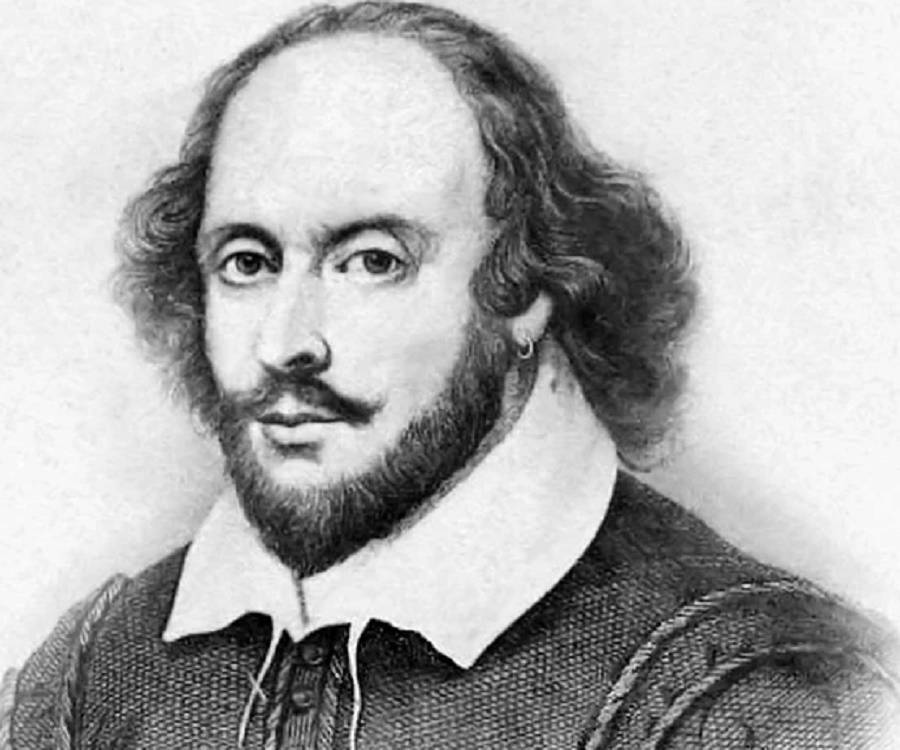
Shakespeare and the Pope


Between 1580 and 1613, William Shakespeare wrote 38 plays and 150 poems, many of which are the best that have ever been written in the English language.


The plays are broken down into tragedies, comedy, and history.

If Shakespeare would have written a history of the Catholic church, it would encompass all three of these categories.

https://reference.yourdictionary.com/books-literature/many-plays-shakespeare-write.html

The tragedy part comes into play when you consider the order of papal succession.

Since the beginning of the Catholic church, there have been 266 popes, including Pope Francis. Not all of them died a natural death in office.

Throughout history, there have been a number of Popes who had very short tenures. In fact, a total of 9 Popes reigned for less than 30 days, and 2 Popes reigned only for 33 days.

A total of 10 Popes served 20 years or longer, and the longest serving Pope was Pius IX, who served for more than 31 years. 

Pope John VIII was the bishop of Rome and ruler of the Papal States from 14 December 872 to his death. He is often considered one of the ablest popes of the 9th century. John devoted much of his papacy attempting to halt and reverse the Muslim gains in southern Italy and their march northwards.

John VIII was assassinated in 882 by his own clerics; he was first poisoned, and then clubbed to death.[5] The motives may have been his exhaustion of the papal treasury, his lack of support among the Carolingians, his gestures towards the Byzantines, and his failure to stop the Saracen raids.[15] Without the protection of powerful magnates or the Carolingian emperor, the papacy after John VIII's reign became increasingly subject to the machinations and greedy ambition of the rival clans of the local nobility

https://www.google.com/search?gs_ssp=eJzj4tTP1TcwMqkqKTZg9OIryC9IVcjKz8hTKMvMzAQAcPMIsw&q=pope+john+viii&rlz=1C1GCEA_enUS1017US1017&oq=pope+John+VIII&aqs=chrome.1.69i59j46i20i263i512j0i512l3j0i22i30l2j0i390l3.34658j0j15&sourceid=chrome&ie=UTF-8

Pope Stephen VI was the bishop of Rome and ruler of the Papal States from 22 May 896 to his death. He is best known for instigating the Cadaver Synod, which ultimately led to his downfall and death.

 The circumstances of his election as pope are unclear, but he was sponsored by one of the powerful Roman families, the dukes of Spoleto, that contested the papacy at the time.

Stephen is chiefly remembered in connection with his conduct towards the remains of Pope Formosus. The rotting corpse of Formosus was exhumed and put on trial, before an unwilling synod of the Roman clergy, in the so-called Cadaver Synod in January 897. Pressure from the Spoleto contingent and Stephen's fury with Formosus probably precipitated this extraordinary event. With the corpse propped up on a throne, a deacon was appointed to answer for the deceased pontiff. During the trial, Formosus's corpse was condemned for performing the functions of a bishop when he had been deposed and for receiving the pontificate while he was the bishop of Porto, among other revived charges that had been levelled against him in the strife during the pontificate of John VIII. The corpse was found guilty, stripped of its sacred vestments, deprived of three fingers of its right hand (the blessing fingers), clad in the garb of a layman, and quickly buried; it was then re-exhumed and thrown in the Tiber. All ordinations performed by Formosus were annulled.

The trial excited a tumult. Though the instigators of the deed may actually have been Formosus' Spoletan enemies, notably Guy IV of Spoleto, who had recovered their authority in Rome at the beginning of 897 by renouncing their broader claims in central Italy, the scandal ended in Stephen's imprisonment and his death by strangling that summer.

 https://en.wikipedia.org/wiki/Pope_Stephen_VI

 Pope Leo V was the bishop of Rome and nominal ruler of the Papal States from July 903 to his death in February 904. He was pope immediately before the period known as the Saeculum obscurum, when popes wielded little temporal authority. Leo V was born at a place called Priapi, near Ardea.

During his brief pontificate, Leo granted the canons of Bologna a special bull (epistola tuitionis) where he exempted them from the payment of taxes. However, after a reign of a little over two months, Leo was captured by Christopher, the cardinal-priest of San Lorenzo in Damaso, and thrown into prison. Christopher then had himself elected pope (903–904). Although now considered an antipope, he had until recently been considered a legitimate pope. If Leo never acquiesced to his deposition, then he can be considered legitimate pope until his death in 904.

Leo died shortly after being deposed. He was either murdered on the orders of Christopher, who was in turn executed by Sergius III (904–911) in 904, or, possibly, both were ordered to be killed at the beginning of Sergius’ pontificate, either on the orders of Sergius himself, or by the direction of Sergius' patron, Theophylact I of Tusculum. According to Horace K. Mann, it is more likely that Leo died a natural death in prison or in a monastery

 https://en.wikipedia.org/wiki/Pope_Leo_V

Pope John X was the bishop of Rome and nominal ruler of the Papal States from March 914 to his death. A candidate of the counts of Tusculum, he attempted to unify Italy under the leadership of Berengar of Friuli, and was instrumental in the defeat of the Saracens at the Battle of Garigliano.

The power struggle between John X and Guy of Tuscany and Marozia came to a conclusion in 928. Guy had secretly collected a body of troops, and with them made an attack on the Lateran Palace. Peter was caught off his guard, having only a few soldiers with him, and was cut to pieces before his brother's eyes. John was thrown into a dungeon, where he remained until he died. There are two variant traditions surrounding his death; the first has it that he was smothered to death in the dungeon within a couple of months of his deposition. Another has it he died sometime in 929 without violence, but through a combination of the conditions of his incarceration and depression.

https://en.wikipedia.org/wiki/Pope_John_X

Pope Benedict VI was the bishop of Rome and ruler of the Papal States from 19 January 973 to his death in 974.

Otto I died soon after Benedict VI's election in 973, and with the accession of Otto II, troubles with the nobility emerged in Germany. With the new emperor so distracted, a faction of the Roman nobility opposed to the interference of the Ottonian emperors in Roman affairs, took advantage of the opportunity to move against Benedict VI. Led by Crescentius the Elder and Cardinal-Deacon Franco Ferrucci, who had been the preferred candidate of the anti-Ottonian faction, Benedict was taken in June 974, and imprisoned in the Castel Sant'Angelo, at that time a stronghold of the Crescentii. Ferrucci was then proclaimed as the new pope, taking the name Boniface VII.

Hearing of the overthrow of Benedict VI, Otto II sent an imperial representative, Count Sicco, to demand his release. Unwilling to step down, Boniface ordered a priest named Stephen to murder Benedict whilst he was in prison, strangling him to death. Boniface VII is today considered an antipope, with Benedict VII as the legitimate successor of Benedict VI.

 Pope John XIV, born Pietro Canepanova, was the bishop of Rome and ruler of the Papal States from November 983 until his death

 Pope Benedict VII died in 983. Empresses Adelaide and Theophanu, Otto II's mother and wife respectively, wished to enthrone Majolus of Cluny as the new pope, but he refused, and Pietro Canepanova was chosen instead. Canepanova took the papal name John XIV to avoid being linked to Saint Peter.

Otto II died shortly after his election, his heir Otto III, being only 3 years old and unable to protect John's position. Antipope Boniface VII, on the strength of the popular feeling against the new pope, returned from Constantinople and placed John XIV in prison in the Castel Sant'Angelo, where he died either from starvation or poison.

The comedy part of papal succession when you consider the times when there was more than 1 pope during a given time period, essentially a religious version of Abbot and Costello’s “who’s on first?”.


Since Popes generally are older when they are elected, it is not unusual for a Pope to die in office. As a result, it is common for 2 different people to serve as a pope in a given year. There have also been 12 times when there were THREE different Popes in one year, and there is one year (1276) when there were FOUR different people to serve as the Pope in a given year.

https://en.wikipedia.org/wiki/Year_of_three_popes 

There was also a period of time (1378 – 1417) when three popes served AT THE SAME TIME. Pope Clement was the Pope of Avignon (France), Urban was the Pope of Rome, and Alexander was the Pope of Pisa.

I went to a Catholic grade school and a Catholic high school, but never learned about any of the scandals that existed with the church over the years.

You could probably write a book about the Crusades (and people have). Although many people consider them to be a worth cause, the truth is that they did a lot of harm, especially if you consider that 7 of the 39 crusades were conducted against fellow Christians.

https://en.wikipedia.org/wiki/Crusades

Steve Berry is one of my favorite novelists.

He has more than 25 million books in print, translated into over forty languages. With his wife Elizabeth, he operates History Matters, an organization dedicated to historical preservation. He serves as an emeritus member of the Smithsonian Libraries Advisory Board and was a founding member of International Thriller Writers. His lates book, “The Omega Factor” alerted me to the fact that papal succession can sometimes be a very messy affair.

 The Catholic church, of course, has 2000 years of history (the third type of play written by Shakespeare). I don’t know if I would say that Steve Berry is a better writer than Shakespeare, but he is definitely a master at making history come alive,